


Zero-click searches and traffic that stays on Google
You search Google for tomorrow’s weather, the euro-dollar exchange rate, or the hours of the on-call pharmacy. The answer is already on the page: you read it and close the tab, without visiting any websites. You’ve just completed a zero-click search—one of the dozens you do every day—and one that billions of people do every day.
On the other side of those searches, however, there are websites waiting—perhaps yours. In Search Console, the pattern is now familiar: stable rankings, rising impressions, declining clicks. You’re appearing more often than before but getting fewer visits, because the results page answers, summarizes, and guides users on its own—often using your own content as a source.
We’ve been observing and measuring zero-click searches for years, ever since featured snippets began to erode the blue links. What has changed, with AI Overviews, is the scale of the phenomenon. And as the scale changes, so does the question we need to ask: how much traffic have I lost is an incomplete question. The right question is where user choice is shifting—and how to be there.
What Are Zero-Click Searches, and When Do They Become a Problem
Google’s search results page has long since ceased to be a list of destinations. It has become a destination in its own right: a place where some searches begin, unfold, and end.
A zero-click search is exactly that—a search that ends on the results page without the user clicking on any result. Sometimes because the answer was right there; sometimes because the action was completed elsewhere, such as a call made from the local pack or a route started on Maps, and the website was never part of the journey.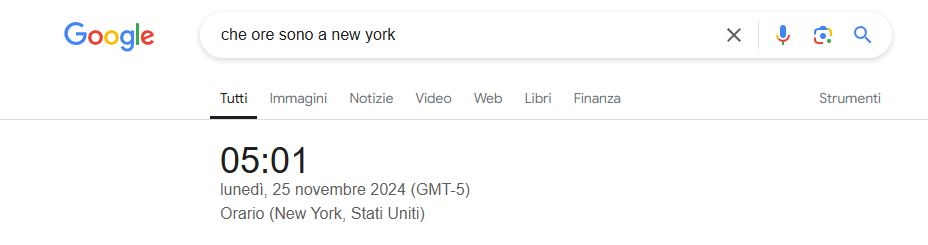
A certain portion of these searches has always existed and is natural. No publishing project has ever relied on queries about the Tokyo time zone, and no one has lost revenue because Google displays the result of a division. The phenomenon becomes strategic when the on-page answer begins to cover search intents that previously drove traffic: guides, comparisons, reviews, and complex questions. That’s where the battle is fought.
This trend, it must be said, follows a clear logic. A SERP that provides a solution on its own is more useful to the searcher, keeps users on the page longer, and is more monetizable for those who manage it—three objectives that feed into one another, because a satisfied user returns, those who return search again, and every additional search is advertising space.

Recognizing this incentive prevents us from interpreting the phenomenon as a temporary deviation: it is a direction consistent with the product, the user experience, and Google’s business model.
Elements that resolve the search on the page
Direct answers were the first piece of the puzzle: calculations, conversions, weather, definitions—specific, verifiable intents, perfect for a box. Then featured snippets extended this mechanism to questions: a section from a page explaining how to store basil is extracted and displayed at the top, with the source attributed and clicking reduced to an optional step.
Knowledge Panel and local packs took it a step further, turning the answer into an action. The panel reconstructs the identity of people, companies, and places, and for many searches on a brand, it’s already the only answer needed; the local pack wraps up proximity searches with hours, reviews, phone numbers, and directions, completing the journey without any website being opened. Meanwhile, the People Also Ask boxes anticipate follow-up questions and resolve them on the spot.
Each section addresses a specific type of intent, and together they form a page that progressively absorbs the simplest searches. For fifteen years, Google’s implicit question has remained the same: what other part of the user journey can be completed right here?
AI Overview expands the scope of the phenomenon
The AI Overviews answer that question with a quantum leap. Traditional features covered simple search intents; generative responses synthesize multiple sources and address complex intents. A comparison like “is external thermal insulation better than internal insulation,” which previously required reading two or three pages, now arrives already compiled, with links provided as supplementary information.
However, it’s worth noting a distinction that safeguards the entire reading experience: AI Overviews did not invent zero-click searches. They have expanded its scope and changed its function, bringing the logic of immediate answers into queries that seemed immune. The phenomenon remains broader—maps, panels, snippets, direct answers, and rephrased searches continue to play their part, and will continue to do so even when the industry’s attention has shifted to the next buzzword.
A story the SERPs have been telling for fifteen years
The term has a birthdate: 2019, when Rand Fishkin confirmed, based on Jumpshot clickstream data, that about half of Google searches were already ending without a single click. This symbolic threshold caused a stir. Google challenged the methodology of the panels and pointed to the billions of clicks sent to websites every day—an objection that holds up in isolated cases but crumbles when viewed over the long term.
The phenomenon, however, had been taking shape long before that, and we were already measuring it. In 2020, our study “Where Have the Blue Links Gone?”, conducted on 10,000 keywords, revealed that organic results were being pushed below the first scroll in entire sectors: in the career & education sector, this happened in two out of three cases; in news, eight out of ten queries were answered directly on the page.
That first phase was a matter of space. The position didn’t lie, but it had stopped delivering: you could be first and still appear halfway down the screen, below a Q&A box and a video carousel. Those who measured only the ranking saw a stable picture; those who measured pixels saw actual visibility dwindling. From there, we began to view SERP features as competitors, on par with the ten links.
The second phase was a matter of CTR. The click-through curves by position—which for years had been almost a physical law of the trade (the first position is worth this much, the second that much)—stopped applying across the board and began to vary SERP by SERP: the same position could yield three times as much or one-third as much, depending on the features active above and beside it. Our work changed accordingly, because before estimating traffic for a keyword, we had to analyze its results page.
The third phase was a matter of attribution—the trickiest part. User journeys began to emerge and take shape outside the site—in search results, in videos, in comments read on the page—while analytics continued to track only the final leg: branded searches on the rise with no apparent cause, rapid conversions from users we’d never seen before, channels that seemed to be dying while revenue held steady. The data wasn’t wrong. It was incomplete.
Today, the issue is value: where it’s generated, who captures it, and how to measure it when the click no longer tells the whole story. The three previous phases remain ongoing challenges—space, CTR, and attribution are still at work, every day—but they’ve coalesced into a single question, which has since become our guiding principle: what is the results page doing with that intent, and what role do you play in it. Everything that follows is that question, put into practice.
The shift in scale: two out of three searches end on the page
The trend is the most solid data of all. Ten years ago, in the United States, just under one in two searches ended without a click; by 2024, that share had exceeded 60%; the most recent survey—covering the first four months of 2026, a Similarweb clickstream panel analyzed by SparkToro—puts it at 68.01%. Two out of three searches. A gain of seven and a half percentage points in two years, the fastest acceleration of the decade.
Within this aggregate, two mirror-image trends are evident. Clicks of any kind—organic, paid, even to other Google properties—have dropped by nearly ten points in two years; follow-up searches have gained more than seven. The user who doesn’t click, for the most part, reformulates the query and searches again: they remain within the search engine, exactly where the search engine wants them.
Every snapshot must be interpreted with its own caveats. The data sources vary from one period to another—Jumpshot, Datos, Similarweb—so the historical comparison describes a trend rather than a precise measurement to the decimal point; and the count excludes the Google app, where on-page results operate even more aggressively. If there is a margin of error, it skews upward.
The Accelerator and the Growth Reserve
The accelerator of the past two years has a name. AI Overviews now appear in over one-fifth of U.S. searches and, according to Ahrefs’ data, reduce the click-through rate by nearly 60% when present. A top position beneath a generative answer is worth only a fraction of the clicks it used to get, even at the same ranking, even when you’re among the cited sources.
AI Mode, on the other hand, still accounts for only a tiny fraction of U.S. searches—0.34% in the same survey—and this figure debunks the simplistic explanation: the decline has occurred almost entirely within the traditional SERP, which has been enriched by AI-generated answers. If anything, fully conversational search is the growth driver behind this phenomenon, with Google reporting one billion monthly users and search volumes more than doubling every quarter.
In Italy, AI Overview is the norm for search
On the Italian market, we measure the numbers ourselves, every day, using the SEOZoom Observatory. The snapshot from June 2026 shows that more than three out of four keywords in the monitored sample—77%, or more than 18 million keywords—trigger an AI Overview. The experimental phase is behind us: for those publishing content in Italian, the generative response is the normal context of competition, and any strategy that treats it as an exception is working with outdated information.
A clarification before continuing, because the two figures in this article measure different things, and the distinction must be kept clear. The 68% figure for the U.S. counts outcomes: searches that end without any clicks. The 77% figure for Italy counts the presence of a feature: keywords for which Google has activated a generative response, which the user can read and then click on regardless. The two metrics are not comparable and do not add up; however, they converge on the same trajectory, because they both describe a results page that captures an increasing portion of the user journey.
The intensity of the phenomenon, moreover, is dictated by the sector—and here the complete picture deserves our attention. The Observatory’s sector studies are based on dedicated samples, designed to represent each sector and therefore not comparable to the aggregate data; the June 2026 survey outlines this hierarchy of AI Overview penetration:
| Sector | Keywords with AI Overview |
|---|---|
| Health | 51.74% |
| Finance | 33.8% |
| Law and Government | 28.92% |
| Family and Community | 28.86% |
| Work and Education | 27.88% |
| Occasions and Gifts | 22.44% |
| Business and Industry | 20.54% |
| News, Media, and Publishing | 19.93% |
| Internet and telecommunications | 19.8% |
| Computers and Consumer Electronics | 19.57% |
| Beauty and personal care | 16.4% |
| Food and Groceries | 16.4% |
| Arts and Entertainment | 16.1% |
| Hobbies and Leisure | 15.43% |
| Vehicles | 14.29% |
| Real Estate | 14.26% |
| Home and Garden | 11.48% |
| Travel and Tourism | 11.03% |
| Sports and Fitness | 10.92% |
| Restaurants and Nightlife | 9.88% |
Keyword share of SEOZoom sector samples that trigger AI Overview in the June 2026 survey. The sector-specific samples are dedicated and do not overlap with the Observatory’s aggregate data.
The picture changes with every survey—which is why we publish it with its date—but the hierarchy has remained consistent ever since we began measuring the phenomenon: the decimal places change, but the logic remains the same.
And this logic directly affects your project. Where mistakes come at a high cost, Google prefers to compile avalidated summary from multiple sources rather than delegating the choice entirely: if you work in health, finance, law, or education, the core information flow has already shifted into the search results, and the challenge is to become the source of that information. Where the answer depends on personal taste, experience, and proximity, a summary adds less value than a firsthand review or a visit—traditional traffic remains stronger, though it’s worth noting that the curve is rising there as well.
The chosen sources reveal the selection criteria
The ranking of the most cited domains in Italian AI Overviews completes the picture. YouTube and Wikipedia lead the pack; right behind them are vertical leaders such as ilMeteo, Treccani, My-PersonalTrainer, and Trenitalia.
Three trends emerge from that list. Video carries weight, and YouTube’s position confirms this. The encyclopedic format—clear definitions, systematic coverage of a field—is what generative systems are most willing to replicate. And the decisive criterion is ownership: the choice falls on whoever holds the data and the language of a thematic domain, such as ilMeteo with weather forecasts or Treccani with language. What do you own that others can only summarize? Your bid to become a source begins with that answer.
Not all searches without clicks are created equal
An aggregate percentage, however solid, remains just a label: it encompasses situations that hold opposite value for your business.
A search like “tomorrow’s weather” that ends on the page is worth zero to a general-interest news site, because that visit would have been lost anyway. It’s worth a great deal, however, to those who appear in the result: ilMeteo builds brand recognition, authority, and direct returns from it. Same search, opposite outcomes.
A query like “best software for managing shifts” that ends without a click may have generated the most valuable effect of all: your name being read in the result, remembered, and searched for directly three days later. The value is there, but it resurfaces elsewhere and later—as a branded search, word of mouth, or direct registration.
Being present, however, comes in degrees. A result may use your page as a source without ever mentioning the brand; it may mention you in the text; it may recommend you as a solution. These are three different conditions, which are progressively more valuable because they are progressively closer to the decision—and they must be measured as distinct entities, because a frequently cited domain with an unmentioned brand describes a specific problem: useful to the algorithm, invisible to the market.
Finally, local searches flip the sign of the count. A search without a click that results in a call from the local pack or a route initiated on Maps has completed a conversion. The missed click was merely a superfluous step.
Lumping these cases together under a single percentage yields the two mirror-image errors that dominate the debate: treating every search without a click as lost traffic, and treating every impression as acquired value. The truth is determined on a case-by-case basis, intent by intent.
And there are those who face the full brunt of the problem: models built on undifferentiated clicks—old-school affiliate marketing, stock images, “how-to” archives—compete precisely in the territory that on-page results are absorbing, and they face a need to update their business model even before updating their content. Those who thrive on their own decisions, relationships, and data have a different task: to guard the points where choices are formed.
The Great Decoupling: Traffic Falls, but the Market Doesn’t
Try following a purchase journey as it actually unfolds. A restaurant owner asks a chatbot which software to use for shift scheduling; receives three names with pros and cons; searches for one on Google and reads its description and the chatbot’s response; watches a review on YouTube; three days later, types in the name and signs up. In Analytics, all of this appears as a branded visit: two minutes, immediate conversion. Discovery, comparison, and evaluation—almost the entire journey—took place on platforms that the website doesn’t track.
The gap between what the market is doing and what the dashboard shows is the great decoupling, and it’s the point where budget decisions are made. Dashboards measure clicks; users get answers without clicking; traffic drops and triggers a red alert that’s often a false alarm. The real risk lies in the reaction: cutting budgets for content and visibility at the very moment new search habits are forming means falling off the radar of the systems that rely on those habits.
The same market, viewed through two dashboards, tells opposing stories. Those who look only at sessions and page views see channels in decline, because they’re measuring the part of the journey that’s getting shorter. Those who cross-reference the signals see a larger system—and certain recurring patterns help explain how they intersect.
Declining clicks and rising branded searches, for starters. This is the profile of a brand that’s doing its work before the visit: the user encounters it in the search results, remembers its name, and searches for it directly. General traffic is falling; the traffic that matters matures elsewhere and arrives later.
Declining clicks and no presence in AI-generated search results is the opposite profile, and here the alarm is justified. The project is losing real ground, as well as traffic: its market is being decided within search results where it doesn’t appear. Between the two cases, Analytics sees no difference—and that’s the whole difference that matters.
Finally, stable conversions with declining traffic indicate a shorter conversion path: those who arrive have already made their choice, and revenue confirms this better than sessions do. Hence the rule that applies to the entire chapter on measurement: no single metric, on its own, tells the whole truth. The meaning lies in the combinations.
The proof comes from projects that continue to grow despite the erosion of referrals: market analyses show a convergence toward branded searches, local activities, and high-intent transactional queries—the three categories in which the click completes a choice already made. The click rewards those who were chosen before the click, and defending the traffic that matters requires building visibility where traffic isn’t measured.
The website becomes the place of verification
The journey that takes shape outside the website also changes the website’s role, in a specific direction. The first contact happens elsewhere—in a summary, a prompt, a SERP—and the user arrives with a preformed answer: they know what you do, have built up an expectation, and come to verify it.
The entry points are changing. The home page loses its centrality in favor of distributed entry points: users land on the product page, the “About Us” page, the terms of service, or the reviews—the pages that answer the question, “Is what I was told true?” Each of those pages, even the most neglected one, can now be the first real point of contact with a customer, and deserves the care that was once reserved for the home page.
Trust, in this phase, is inherently fragile. If the page confirms the promise—ranking, reviews, prices, tone—conversion happens faster, because the visitor is already informed. If it contradicts it, the disconnect is immediate: expectations were formed before the visit, and the dissonance is felt right away. The consistency between what external results say about you and what your pages show has become a conversion asset, to be designed with the same seriousness with which the homepage was once designed.
The analysis starts with the query: what is the SERP doing with that intent?
When faced with a well-ranked keyword that’s losing clicks, the instinctive question is how to recover CTR. We’ve already encountered the right question—and it’s the one we’ve been using for years: What is the SERP doing with that intent? Is there an AI Overview that provides the answer? A local pack that completes the action? Is the on-page answer comprehensive, or does the user rephrase their query and search again? Until you answer that, every optimization is a shot in the dark.
The answer dictates the course of action. Within SEOZoom, the CTR Anomaly Detector identifies each anomaly: it builds the expected click curve for your site position by position, compares it with actual clicks, and pinpoints the likely cause—a generative answer, someone else’s snippet, a Q&A box, or a weak title. If the snippet is the problem, clicks may return, and that’s where you focus your efforts. If the SERP has absorbed the answer, persisting with traditional optimization wastes resources, and the goal shifts from clicks to citations.
Once the goal shifts, the questions change. Are you already among the sources of answers that dominate your market? The AI Overview tool lists the keywords for which your domain is used as a source, along with the position of the mention and how often you appear first: this is the line that separates shifted value from lost value. And when you’re a source, it remains to be seen whether the brand exists within the answer: AI Prompt Tracker tracks prompts relevant to your market and distinguishes between domain citations, brand mentions, and explicit recommendations, showing their trends over time.
The big picture completes the diagnosis. AI Visibility synthesizes your presence across AI Overview, AI Mode, ChatGPT, Perplexity, and Gemini, while GEO Audit and AEO Audit indicate how well your content is optimized for selection. On the other hand, Search Console and Analytics integrated into the project anchor everything to real-world signals: trends in branded searches as a measure of awareness, and conversions as the ultimate proof—those arriving from AI are already informed and should convert more effectively.
Read one by one, the numbers tell disconnected stories—a drop, an anomaly, a mention, a trend, a steady performance. Read together, they tell a single story: the value of that keyword has shifted within the search result, and the right course of action is to defend the mention and optimize the page that receives the traffic. Chasing lost CTR was the wrong strategy.
From Diagnosis to Content Intervention
From an editorial standpoint, the diagnosis leads to three types of work. The first is to build pages that deserve to be cited: original data, firsthand experience, and figures that only you possess. Content that merely summarizes the top SERP results gives the system no reason to cite it, because the model already possesses that information.
The second is to cover the topic in its entirety. The systems compose answers by breaking down the question into related searches, and they reward those who master the topic more than those who optimize for a single keyword: comprehensive coverage of a topic is now worth more than perfection on a single query.
The third task involves subtraction. Outdated, ambiguous, or content built on outdated keyword stuffing confuses the models and keeps you out of the answers: a content audit that cross-references performance and actual traffic tells you what to update, what to consolidate, and what to let go. Updating content stops being mere maintenance and becomes the selection of the pages by which you want to be judged.
What remains is how you present the results. Metrics for visibility in search results are indirect and must be paired with real metrics—branded traffic, direct traffic, conversions—over monthly and quarterly timeframes, because a single data point in generative systems is inherently volatile. A report that works highlights the authority you’re building and links it to revenue, rather than chasing a session count that measures a diminishing portion of the user journey.
SEO is the entry point; AI engines are the final distribution channel
Clicks were a means; the decision has always been the end goal. SEO builds the index from which systems draw, determines who qualifies as a source, and fuels the responses that resolve searches on the page; AI engines take that material and deliver it to the point where the choice is made. Working on only one of these two levels leaves half the journey uncovered.
The picture, when pieced back together, brings three levels into focus. Traditional SEO remains the foundation, because without rankings, crawling, and solid content, you don’t even enter the realm of possible sources. Visibility, built upon that foundation, is distributed across various channels—SERPs, generative answers, prompts, citations, and brand mentions—and each channel requires its own dedicated attention. Finally, measurement must analyze both halves within the same framework: clicks and conversions on one hand, and presence, citations, and branded search queries on the other, because neither alone can fully describe the market anymore.
This phenomenon has been growing for over a decade, and every innovation from Google has expanded its scope: it’s time to stop waiting for it to end and instead equip ourselves to recognize value where it has shifted—in presence, citations, recommendations, and the branded search demand that exposure generates.
The click hasn’t become less important. It’s become less automatic—and the real work, today, begins earlier.