

SEOxAI 2026: What would you like AI to say about your brand?
What do we want AI to say about us? For months, the industry has been asking itself, in general terms, how to get into AI. At SEOZoom Day 2026 – SEO for AI edition, we showed that the question must change and give way to a fundamental strategic need—to govern search on generative engines—by defining the practical steps necessary to guide response engines and protect the brand’s visibility.
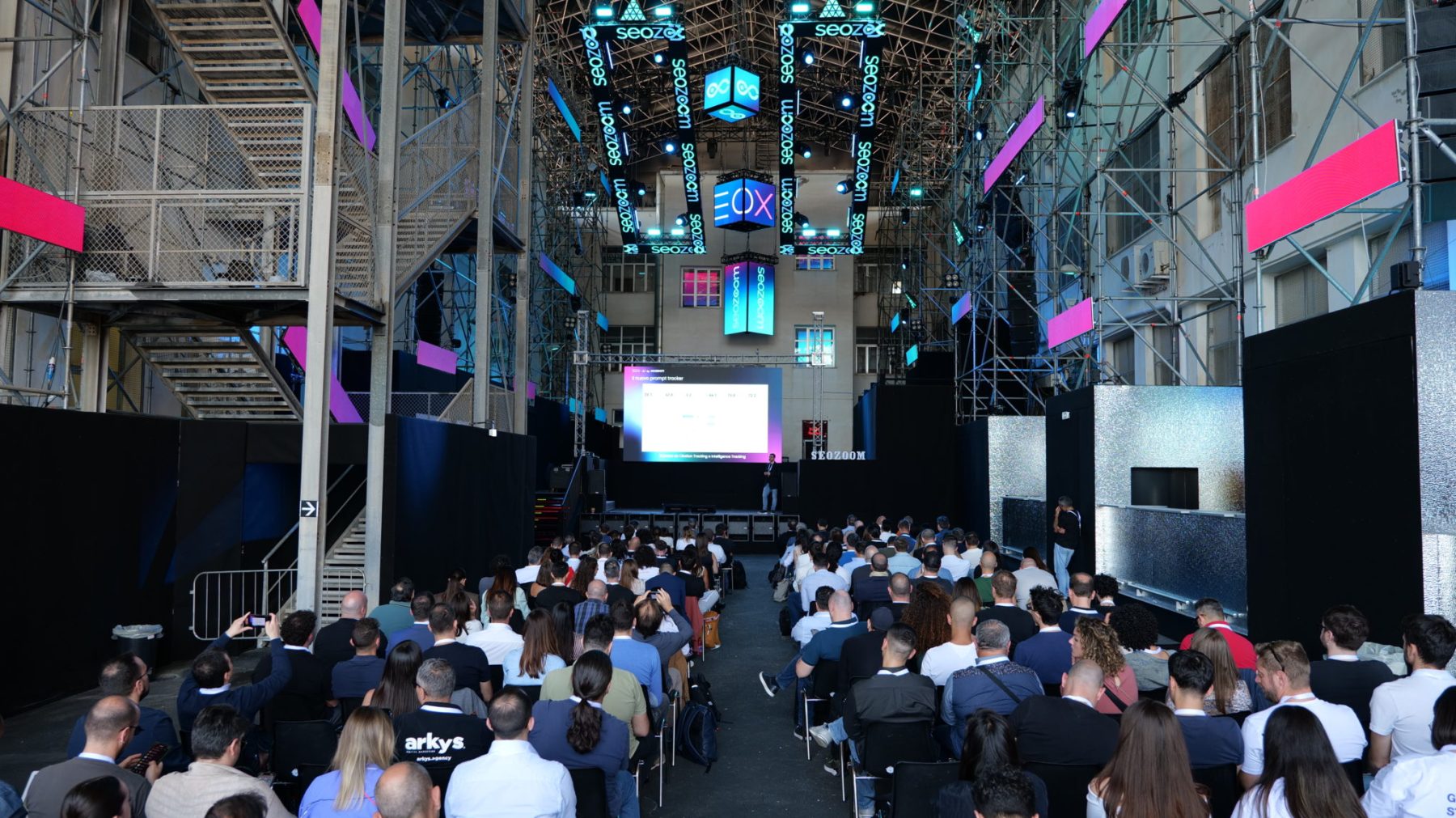
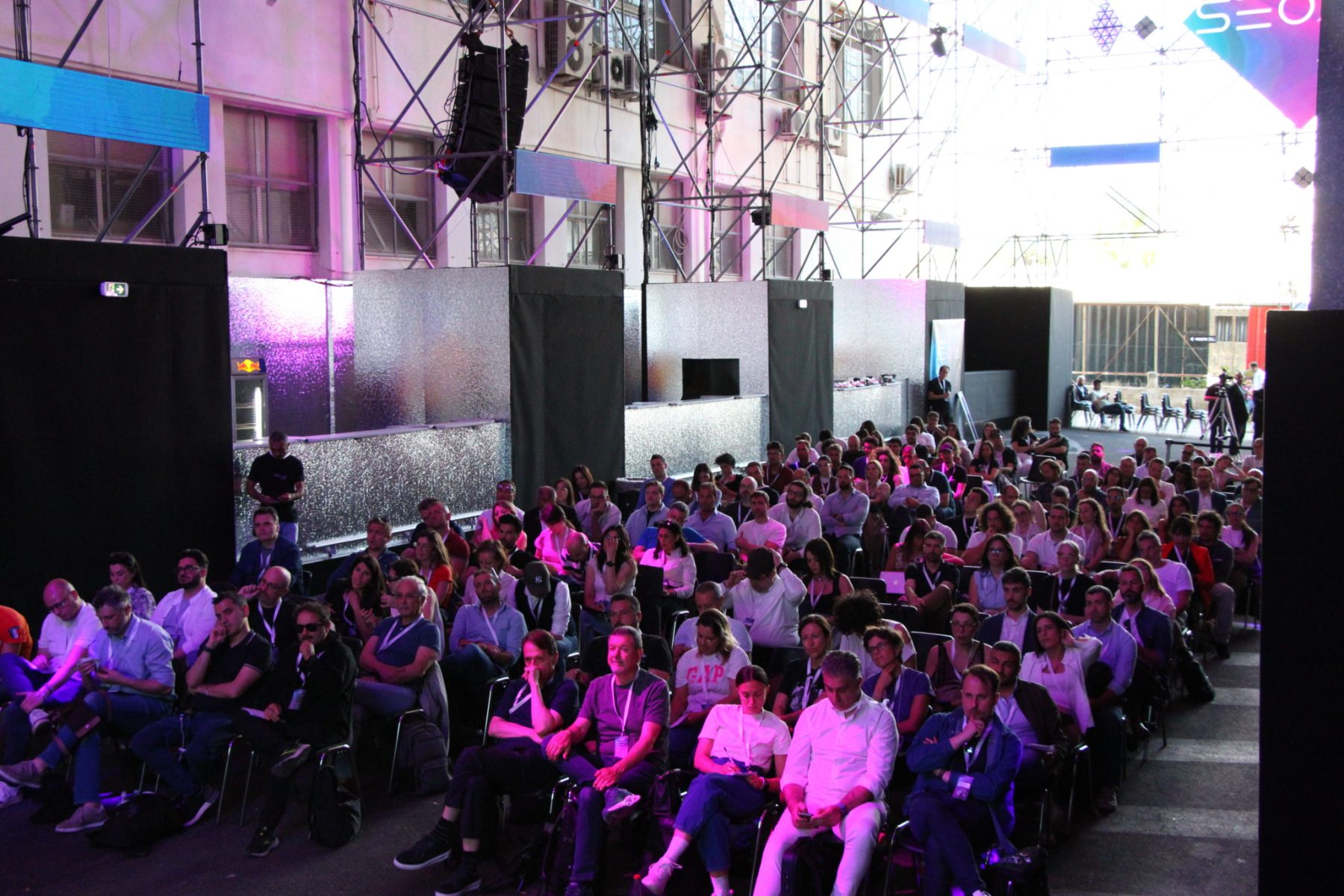
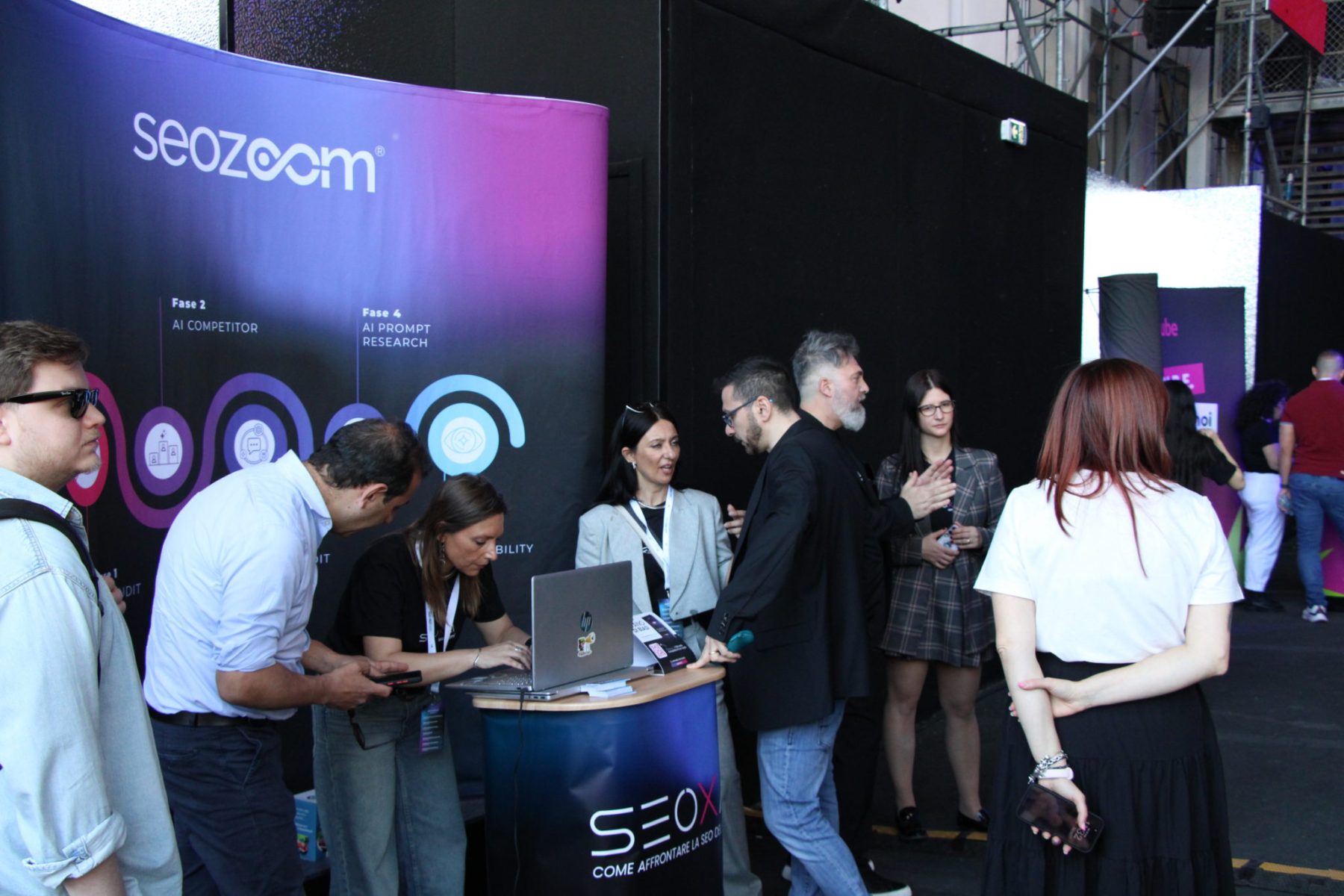
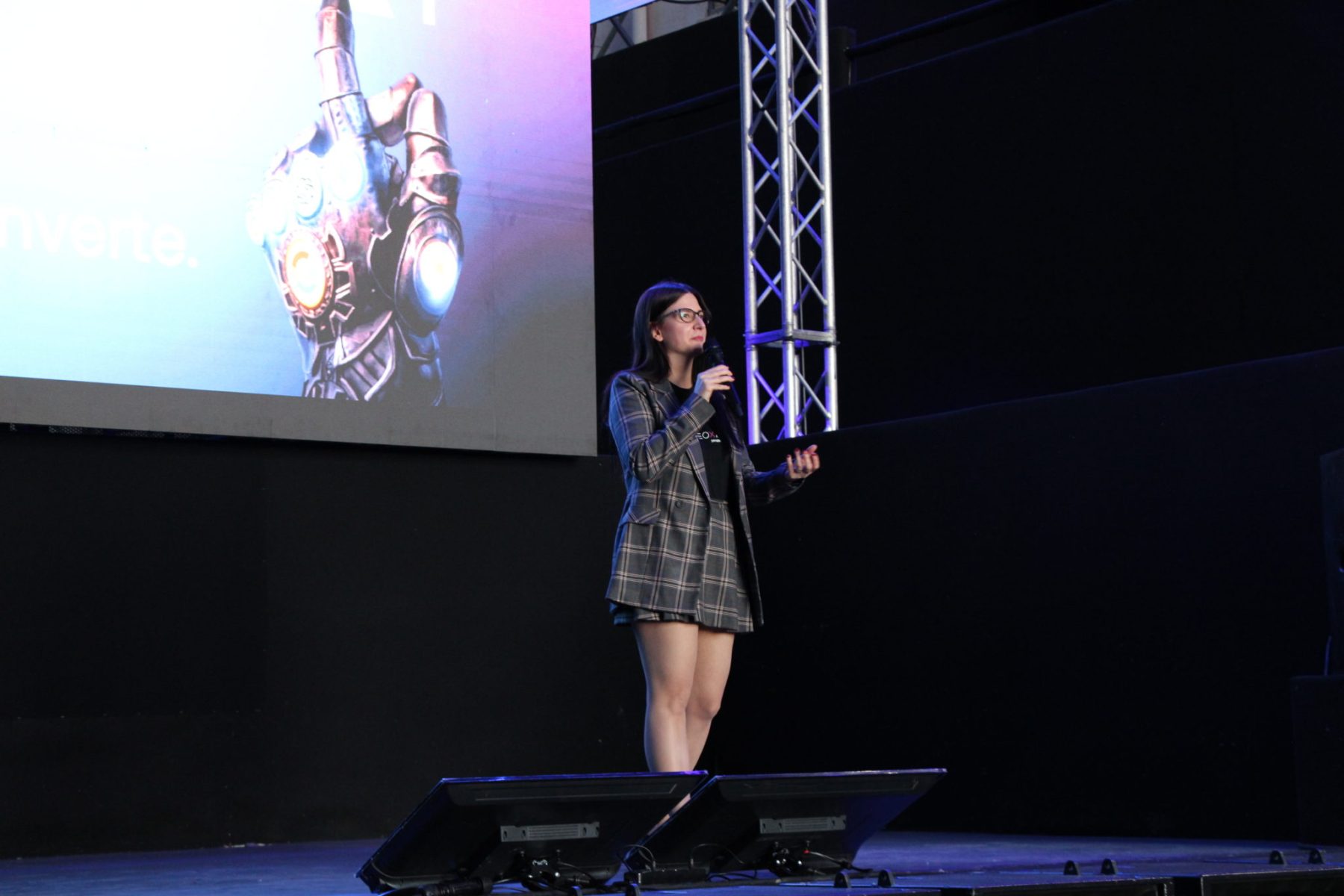
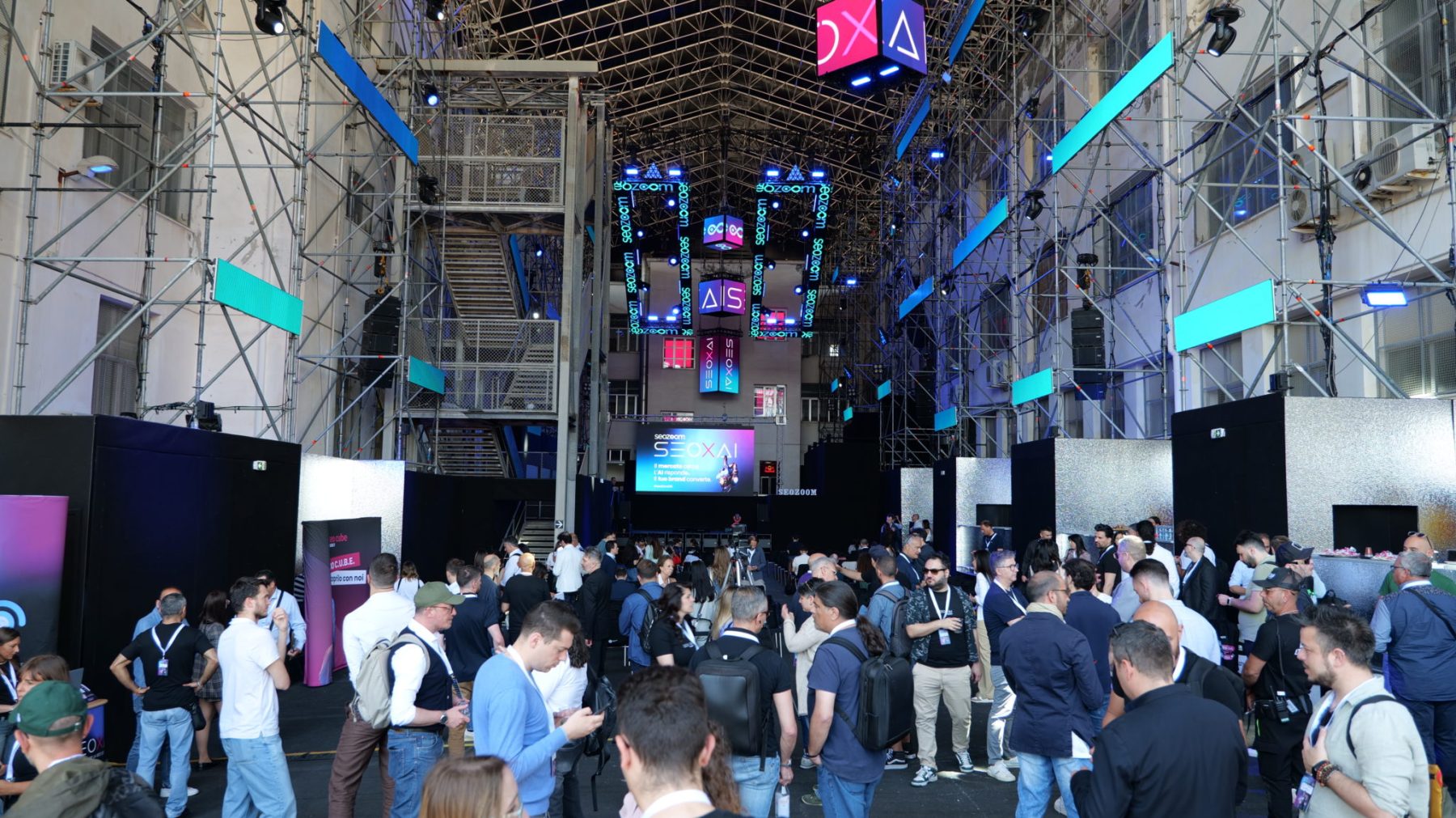
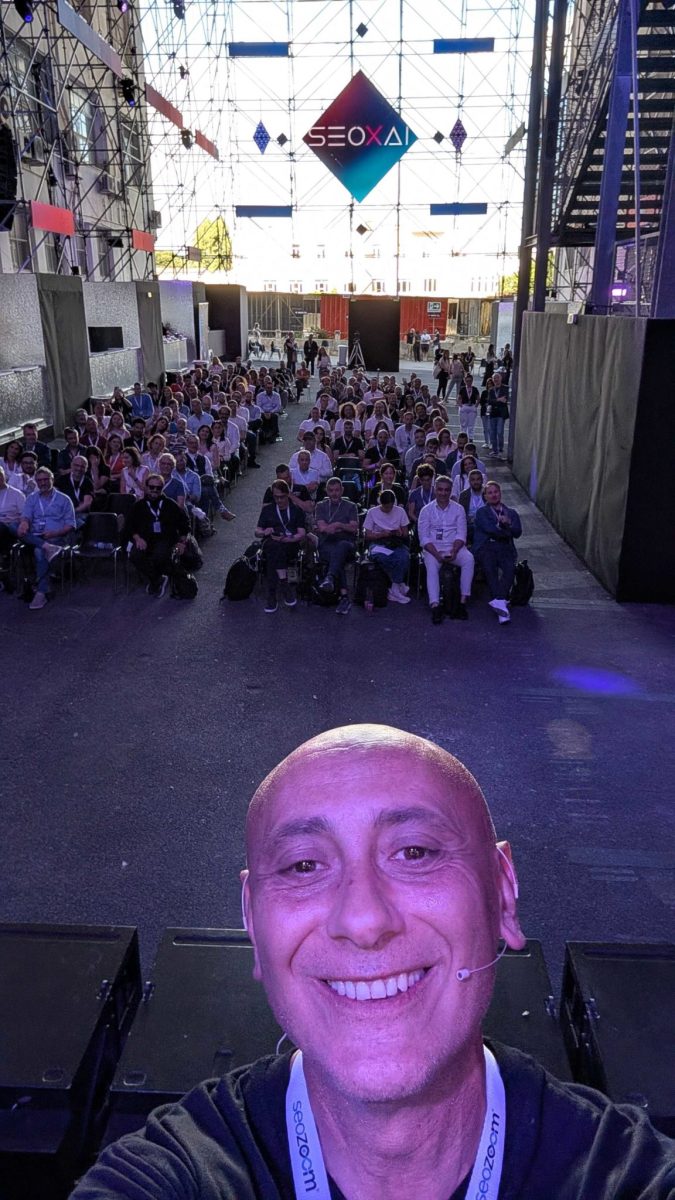
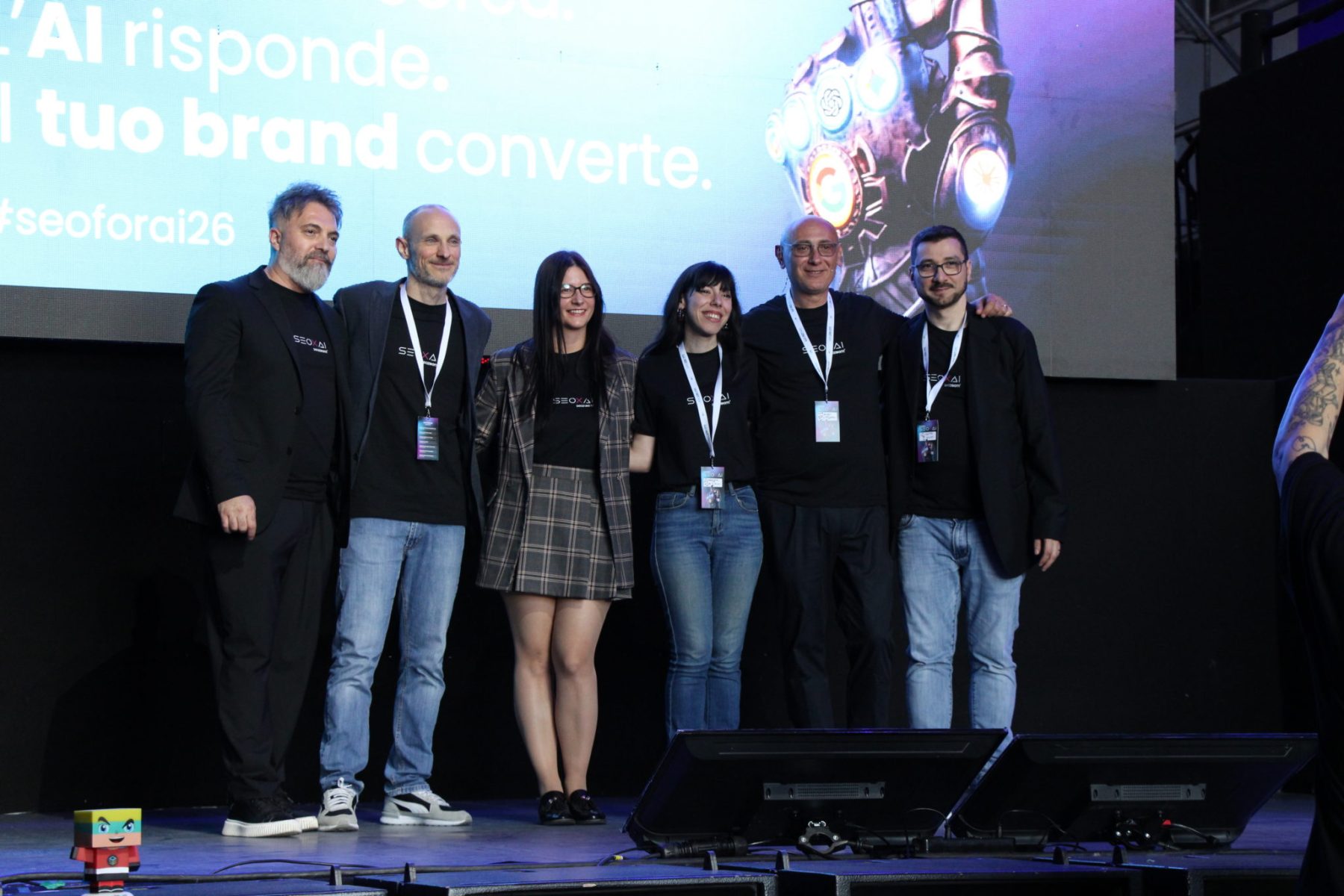
The intensive training day at the former NATO base in Naples brought together over 200 participants—selected from among entrepreneurs, digital professionals, agencies, the national press, and innovation experts—all gathered to move the needle by a decisive centimeter. SEO for AI starts with SEO, as Google has also recently reiterated, but now is the time to look beyond rankings and clicks. Today, success requires direct control over the sources that feed the algorithm, an understanding of the semantic nodes that guide its reasoning, and the construction of an unassailable brand identity.
Topics discussed included prompts, fan-out, AI Overview, GEO, AEO, social search, zero-click, and brand identity. The common thread, however, was a single one: turning this new visibility into daily work. In the content to be rewritten, the signals to be strengthened, the metrics to be interpreted more effectively, and the choices that companies, agencies, and professionals must immediately incorporate into their projects. Because today, you win not when you appear in the answers, but when you are understood in the right way and cited as a useful, credible, and recognizable source.
Becoming an answer means creating the conditions to be understood
It would have been easier to say that AI is just a new space to monitor: a few prompts to check, a few citations to count, a few metrics to add to reports, while continuing to measure visibility with the same old reflexes. But at SEOZoom, we’ve taken a different path—one that’s more useful, even if less reassuring: if generative answers are shaping the way people discover, compare, and choose, our work can’t stop at presence. It must extend to representation—understanding how it’s interpreted, what role it plays, which sources support that interpretation, and what impression remains when AI presents it to decision-makers.
At SEOZoom Day 2026, we’ve distilled this transformation into a method. Classic SEO is still necessary—in fact, it’s more essential than ever—because without solid organic foundations, you won’t even make it onto the list of sources that feed the responses. Building on that foundation, however, a second phase unfolds, consisting of content that’s more readable by models, more consistent identity signals, presence distributed beyond the website, new metrics, and cyclical monitoring of perception.
“Entering the AI space” is a too narrow term to describe the work ahead of us. We need to decide what image we want to build, which concepts must remain associated with the brand, which sources must confirm that interpretation, and what content must provide the model with clear material to retrieve and use.
The real point: controlling what the AI will say
For a long time, we worked to adapt to what the algorithm selected. You’d study the SERPs, readjust your content, monitor ranking drops—the algorithm set the pace, and you tried to keep up.
Today, that way of working has turned on its head: proactive planning has replaced reactive measures, and the work begins long before the page is published. Ivano Di Biasi summed it up with the metaphor of two phases. The first is qualifying for the table: being among the sources that AI can retrieve. The second phase is winning the contest within the search result, when the system chooses whom to cite and to whom to assign the role of narrator. These are two distinct games, with different criteria, and they’re played simultaneously. The first is the prerequisite without which the second cannot begin. The second is the real battleground where the brand’s visibility will be decided in the coming years.
That’s why the question becomes: what will AI say when it encounters the brand, what signals will it find, which sources will it select, and what words will it use to present it to a person who is already comparing, choosing, and deciding? It’s not a matter of choosing between AI and SEO, of determining whether SEO is dead, or of figuring out how to rank on ChatGPT. The issue is more pressing: the brand can no longer limit itself to monitoring what’s out there. It must create the conditions so that AI interprets it correctly. It’s a new responsibility, and it must be recognized as such even before we discuss tools.
Ivano’s book brings “SEO for AI” into a method
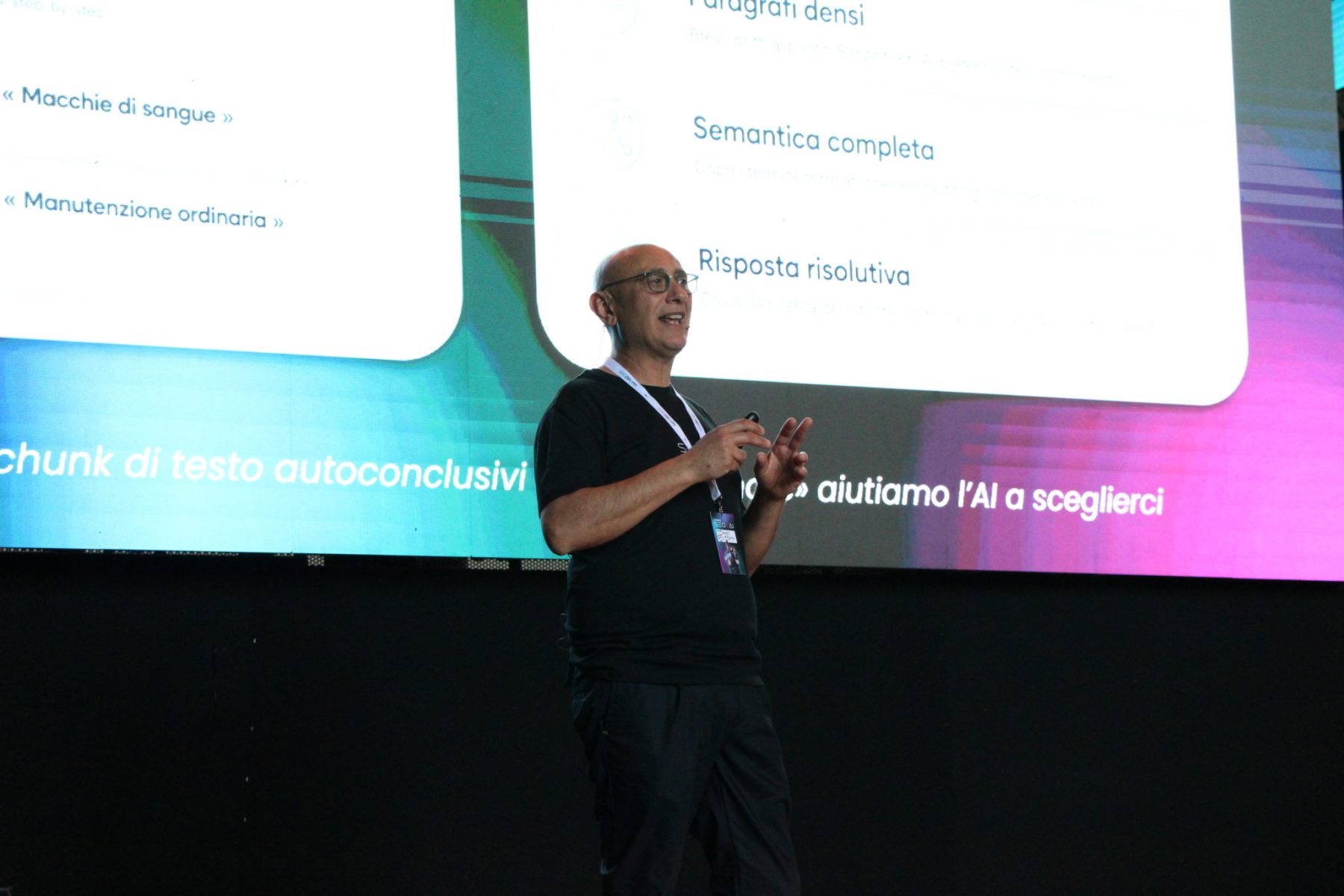
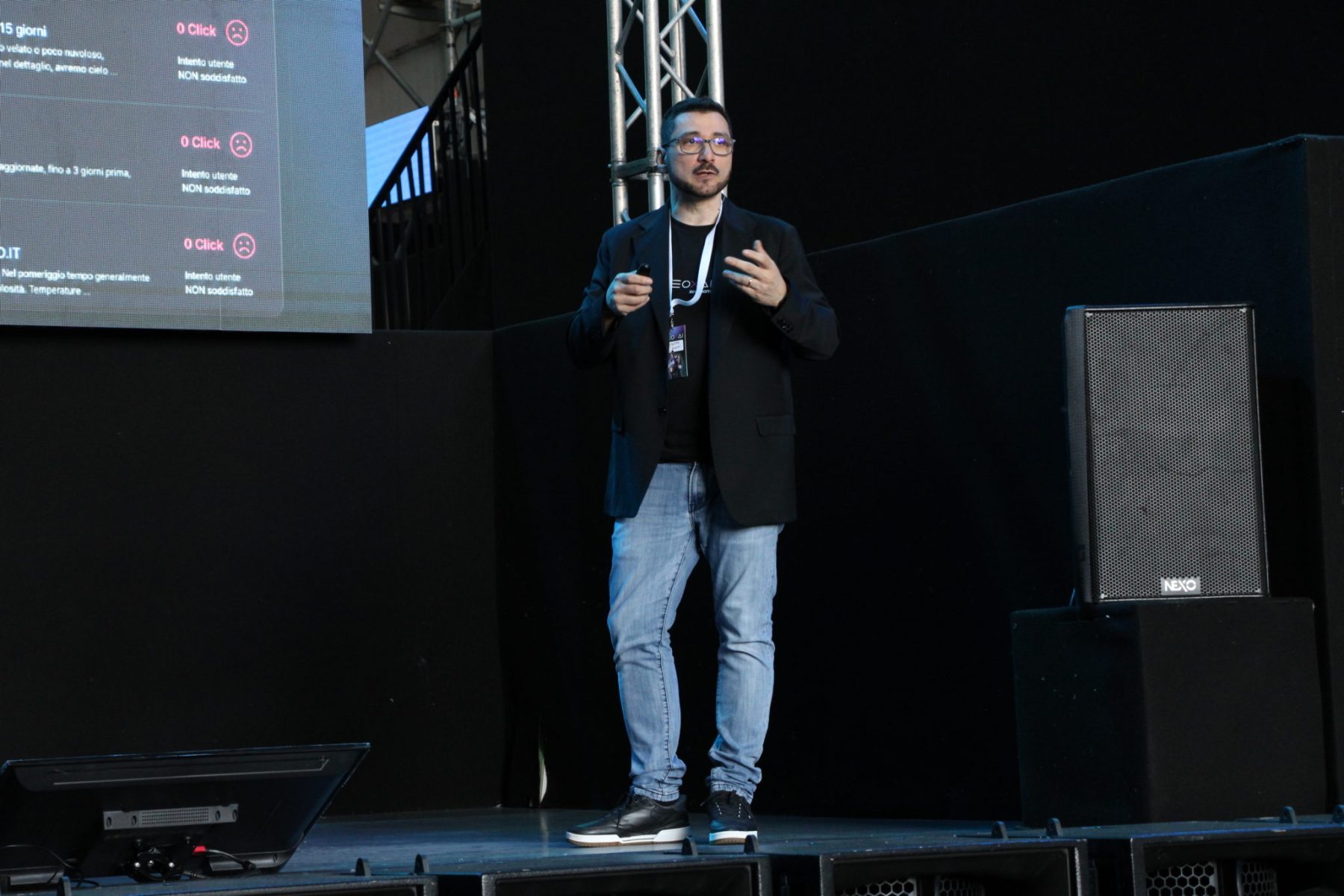
The opening keynote immediately set the stage. Ivano began with a prediction he’d made in 2024 that has now become a reality: traditional search engines, as we knew them, are obsolete. AI has broken down language barriers; it understands dialects, spelling errors, and questions lacking keywords, and returns relevant answers in seconds.
This led to the first major shift that defined the day. SEO isn’t dead, but its role is changing. AI responses flow 100 percent through SEO—search engines select the knowledge, and AI reworks it—which is why being indexed and ranked on Google remains a prerequisite. Without a solid presence on the search engine, a brand doesn’t even make it into the pool from which generative systems draw their sources.
But beyond that prerequisite, a different game is played, one where what matters is the information density of the content, the consistency of the signals, and the semantic proximity to the user’s intent. The target changes; the criteria change. And—an idea that resurfaced in a thousand different forms in the hours that followed—the way you gauge whether you’re winning also changes. Then there was the discussion on fan-out, one of the concepts that resonated most clearly with the audience. A single user query generates 5–20 parallel AI searches, which don’t look for five sources saying the same thing but rather five complementary perspectives. The hyper-specific wins out over the generalist. And that’s where a profound shift in the way we work with content begins.
Ivano Di Biasi’s new book, “SEO for AI – It Really Happened”, emerged from this shift. Two years ago, it seemed like a far-fetched prediction; today, it has become a matter of corporate survival. The statistics already paint a picture of a market where 37% of online purchases are influenced by chatbot recommendations, and 50% of users rely on digital assistants to make purchasing decisions. On Google, AI Overviews are rewriting the way people access information. The consequence is simple to see but difficult to address: if a brand isn’t indexed, understood, and recommended by generative models, it loses ground the moment a choice is made.
The SEOZoom Case Study: How We Redefined Our AI Positioning
On stage, we also presented theSEOZoom case study within this framework, as proof of concept. We applied to ourselves the very same process we ask the market to follow: measuring our presence in search results, analyzing prompts where the brand might be mentioned, verifying sources, observing competitors, strengthening our content, and assessing where AI understands us and where our message needs to be clearer.
Before our systematic work on AI, SEOZoom was perceived by the models as a brand with a clear identity, but one that we found limiting. The system defined us as software, a platform, a generic tool, or a technical solution. There was no recognizable entity around which to build a synthesis. The solution was to deliberately construct co-occurrences. In the first phase, terms like “manual,” “method,” “school,” and “teacher” populated our content, interview transcripts, the educational vocabulary of our masterclasses, and tool presentations. Month after month, the model consolidated the archetype of the Sage: SEOZoom as a reference for methodology, the Academy as a hub of SEO knowledge and training—knowledge made accessible. In the second year, we realized that the “Sage” alone wasn’t enough. The audience was looking for a partner—someone who, in addition to teaching, could solve problems. We added new co-occurrences—“solves,” “guides,” “supports,” “business goal”—and featured case studies and storytelling about client transformations across our channels. Result: Today, AI recognizes SEOZoom as a dual archetype, Sage + Strategic Ally. This isn’t a branding exercise explained in hindsight. It’s proof that by working on co-occurrences, the role assigned by the system can be changed.
New organic search demands precisely this level of responsibility. You can’t ask AI to portray you well if you don’t give it clear signals. You can’t expect to be recommended if the web describes you in a weak, contradictory, or fragmented way. You can’t control the response unless you’ve first created the conditions for that response to take the right form.
The brand conquers cognitive and vectorial space
Generative visibility requires treating the brand as an active entity that models read, classify, and use to provide answers. Every communication action must generate clear and interpretable signals. Artificial Intelligence reconstructs corporate identity by assembling content, external sources, quotes, reviews, personal profiles, social media mentions, and structured data.
Brand Builder Salvatore Russo has defined the new competitive dividing line: the strategic evolution toward Share of Model. To impose its identity on generative models, a project must first and foremost dominate a cognitive space in people’s minds. Artificial Intelligence, in fact, scans, processes, and absorbs human behavior. The gravitational weight within the vector space is a direct consequence of the actual authority acquired by the brand. Systems organize knowledge and select sources precisely by analyzing the imprint left on the public.
This paradigm shift demands rigorous execution. The “owned voice,” archetypes, operational E-E-A-T, proprietary data, and source consistency constitute the project’s vital infrastructure. These are the raw assets that compel AI to place the brand in the exact market category, associate it with the right entities, and recommend it as the most credible resource for making a decision.
The issue becomes even more concrete when the generative response assigns a role to the brand. Being mentioned and emerging stronger from it are two different outcomes, as highlighted by Gennaro Mancini’s presentation. AI can speak ill of you, incorporating critical points, reviews, forums, outdated directories, or unmoderated sources into its summary. Or it can misclassify you, describing you as a budget alternative when you’re aiming for the premium segment, pairing you with competitors that don’t represent your market, reducing you to an overly narrow niche, or using you as a mere supporting source without guiding the decision.
This is where authority-building stops being merely cosmetic. “About Us” pages, author profiles, third-party sources, reviews, product descriptions, editorial citations, and information shared off-site musttell the same brand story. Every misalignment becomes noise. Every omission leaves room for speculation. Every obsolete source can resurface in the summary when the model attempts to reconstruct an up-to-date response.
The generative response is aharsh mirror: it takes what it finds, compresses it, organizes it, and assigns it meaning. If the brand hasn’t established consistent signals, that mirror reflects an incomplete version.
New metrics are needed when decision-making changes
The old dashboard isn’t enough when part of the decision is formed before the click. Traffic, rankings, conversions, and CTR remain valuable data, but they only show the visible part of a journey that today can begin and unfold within an AI response. If a user asks ChatGPT, Gemini, Perplexity, or AI Mode which solutions to evaluate, which brands to consider, which tools to use, or which company to choose, part of the commercial process takes place in a space that traditional metrics have never observed.
Giuseppe Liguori hit the nail on the head regarding this very point, starting from a very common excuse: AI changes its responses, so it can’t be monitored. It’s the same reflex that SEO has been familiar with for years. When something seems unstable, many stop measuring it and declare it unmanageable. In reality, the phrases change but the semantic field remains. If a brand is consistently placed within a certain semantic field, if it appears in a coherent set of Money Prompts, if it’s cited as a source or recommended over competitors, that’s no coincidence. It’s a signal.
The new Prompt Tracking was created to identify precisely this stability beneath the noise. It doesn’t measure a single phrase, but rather a set of questions in which AI can mention brands in the market. A Money Prompt may seem informational, but it can conceal an economic decision. “How do I learn SEO?” can trigger mentions of brands, courses, platforms, professionals, and communities. “How much does SEO cost?” might be the moment when an entrepreneur decides whether to hire someone, buy a tool, or rely on a consultant. The wording of the question alone is no longer enough to gauge its value. You need to observe what happens in the response.
This gives rise to new metrics: Citation Rate, Mention Rate, Recommendation Rate, Sentiment Score, Positioning Index, and Defensive Ratio. They do not replace traditional SEO metrics. They complement them at the point where generative search generates visibility, perception, and trust before the user visits the site. Knowing that a brand is mentioned is useful. Knowing whether it is recommended, in what tone, alongside which competitors, and as a direct source of the answer is much more important.
This shift in perspective ties into content strategy. Elisa Contessotto has framed this within the zero-click economy, where the website loses its monopoly on the start of the user journey and increasingly becomes merely a confirmation page. The user may arrive after already receiving a summary, after comparing alternatives, or after forming a preference through a virtual assistant. At that point, content serves a purpose beyond simply capturing traffic. It serves to confirm, reinforce, and make verifiable what the AI has already begun to convey.
When you look only at traffic, you risk interpreting as a loss what is, in part, a transformation. A page may receive fewer clicks and still support the brand within the responses. Content can function as a source, as confirmation, as a semantic node that helps the model better interpret a topic. Cutting this content because it “brings little” is like using a broken thermometer: you measure a temperature, but you’re ignoring the body that has changed.
The editorial architecture must follow this shift. Fan-out doesn’t just reward the generalist page that tries to cover everything. It seeks complementary perspectives, clear chunks, self-contained content, and sections capable of addressing a specific nuance of the user’s need. Clusters are no longer just for organizing keywords. They serve to build a map of coherent answers, where each page reinforces the way the brand is perceived, cited, and used.
Editorial work, therefore, becomes both more technical and more strategic. You must write for people, but also make the content clear enough to be selected, understood, and reused by a generative model. You must speak to the reader, but you must also eliminate ambiguity for the model. Content that works doesn’t just fill a page. It builds a position.
Part of trust is determined off-site
The new visibility doesn’t exist solely on the domain. This is one of the most uncomfortable ideas that emerged most strongly in Naples, because it forces us to stop treating social media, communities, reviews, personal profiles, and external platforms as side channels. Generative engines seek confirmation. When they need to determine whether a brand is credible, they aren’t satisfied with its self-declaration. They look at what the web has to say about that entity.
Roberta De Falco expanded the discussion to include social search and entity validation. The shift from the social graph to the interest graph has changed how social content contributes to discovery. It’s not just about who follows whom. What matters is which content is recognized as relevant to a particular interest, which people are associated with a topic, and which signals recur across the platforms that users and search engines consult to navigate.
In this context, LinkedIn, YouTube, Reddit, TikTok, Instagram, and other platforms are not isolated showcases disconnected from SEO work. They are places where the brand is explained, challenged, confirmed, fragmented, or reinforced. A YouTube transcript can become readable content. A LinkedIn profile can confirm the link between a person and an entity. A discussion on Reddit can affect perceived reputation. A review can become the detail that AI incorporates into a response.
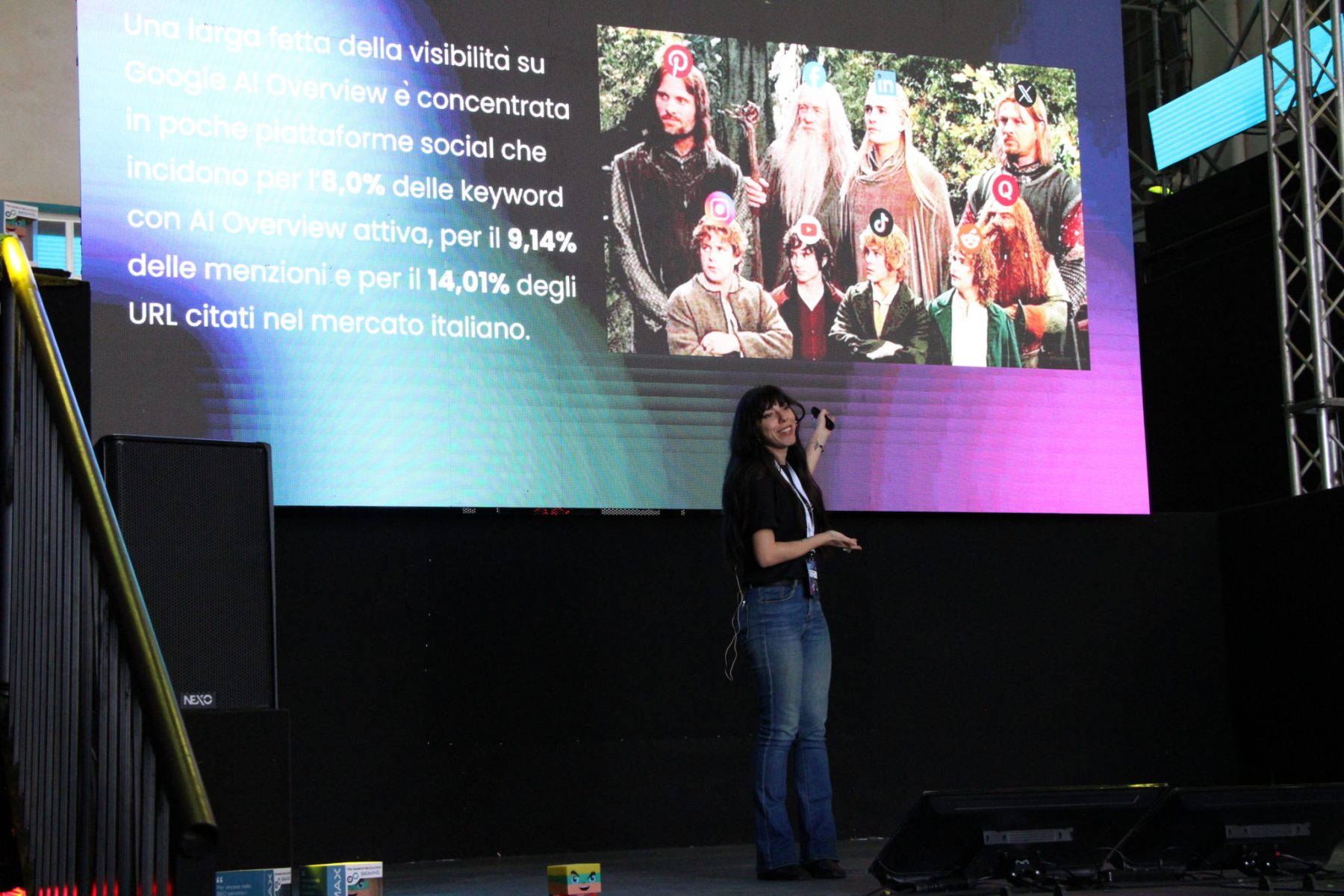
And it’s a serious mistake to think this is just a hypothetical future: we’re already in a system where off-site signals can influence what Google and generative engines select, synthesize, and display—and the 9% of AI Overview responses that come from social media is just one of the statistics that makes this trajectory clear. This is why brand management must move beyond the idea of proprietary control and become distributed consistency.
This is precisely where the human element comes into play. As AI accelerates content production, the recognizability of people, experiences, sources, and real-world cases becomes an even stronger signal. Not because the algorithm needs poetry, but because it must distinguish between generic information and verifiable traces of expertise. A signed case study, a real-life testimonial, a public statement, a technical discussion, or an active community produce signals that differ from those of a perfect, isolated corporate page.
The GEO Roadmap Transforms Change into a Workflow
Ivano Di Biasi’s closing remarks restored order to a landscape that easily risks becoming confusing. When everything changes at once—prompts, AI Overview, chatbots, social search, zero-click, content, reputation—the temptation is to chase every signal. The GEO Roadmap serves exactly the opposite purpose: to transform change into a workflow.

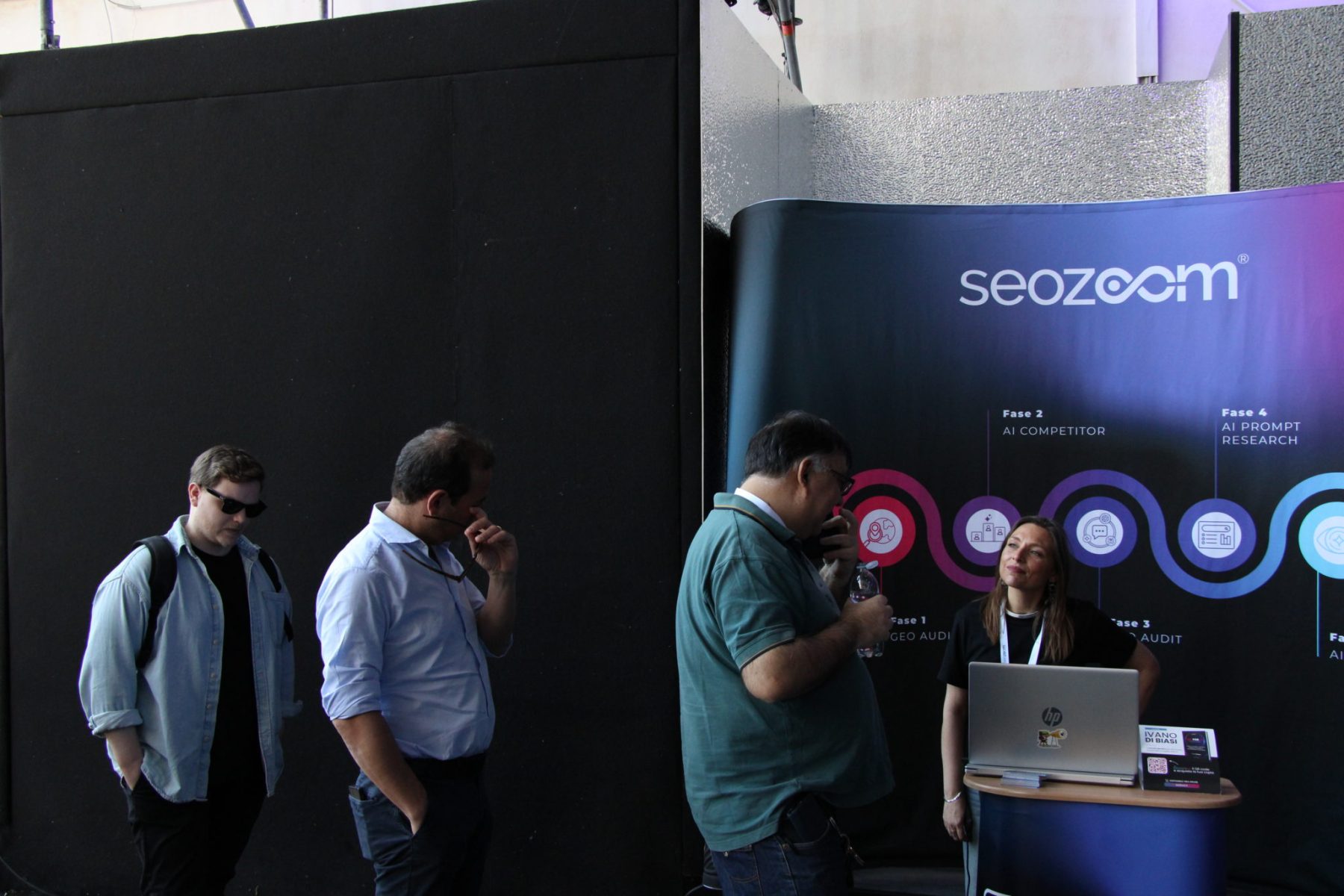
The first step is to measure how AI interprets the brand. The GEO Audit examines the models’ memory, established associations, themes, sentiment, category, and the way the entity is understood even before a live search takes place. This reveals distortions that are often invisible in traditional SEO analyses: a brand may be strong on Google but weak in the AI’s memory, or recognized in a category different from the one it aims to dominate.
The second step is to compare that memory with what happens in current responses. The AEO Audit delves into the live part of the system, where answer engines search the web, retrieve sources, and generate up-to-date answers. The gap between GEO and AEO is one of the most valuable aspects of the method, because it reveals the distance between what the AI “thinks” it knows and what it can actually reconstruct today through the web. The action plan lies within that gap.
Then comes the most challenging part: taking action. It’s not enough to correct a page or add a section. You need to take action on clusters, entities, content, structured data, author profiles, confirmation pages, external sources,digital PR, mentions, backlinks, and social signals. Every action must help the model better understand the brand, not just find one more keyword. The goal is to create a presence that is more consistent, richer, and harder to misinterpret. SEO, social media, content, and digital identity can no longer be kept in separate silos, because if you separate them, you lose pieces along the way. This is the crux of the matter. The brand’s external presence must be designed, not simply endured. Every source that mentions you can become a piece of the response that AI will build tomorrow.
The roadmap concludes with cyclical monitoring. AI perception isn’t a one-time certification. It changes when sources change, when competitors publish new content, when Google updates its generative interfaces, or when a review or social media post enters the scope of available knowledge. That’s why the work must be monitored, measured, and adjusted over time.
After Naples, the work is no longer comfortable
The former NATO base was not a neutral choice. Anunconventional venue, steeped in history, hosted an event designed to mark a break with the past. In 2025, we had changed the format and achieved a significant response. In 2026, we could have protected it, replicated it, and rested on our laurels. We chose a different path.
We narrowed our focus to a technical focus—more specialized, more risky. We asked over 200 people to engage in an intense day filled with data, methodology, tools, real-world cases, and new questions. We brought to the stage a perspective that allows for no shortcuts: AI is already embedded in research and decision-making processes, and brands must learn to be interpreted correctly.
May 22, 2026, remains a milestone. Since that day, the market has had a clearer GEO roadmap, a new operating manual, and a set of tools to measure what, until recently, seemed impossible to measure. Those in the room returned with notes, questions, priorities, and a clearer understanding: the change isn’t about a single channel, a Google update, or a new acronym to add to SEO. It’s about how brands are discovered, interpreted, compared, and chosen.
Naples reminded us of this, too. Training sessions work when they don’t end in the conference room, when they bring a useful sense of urgency back to projects, when they make you want to review content, check a source, measure a prompt, tweak an author page, look at social media with fresh eyes, and ask yourself whether the brand we’re building is truly the one that AI will present to users.
Never get complacent, then. Not as a slogan, but as a method. Raise the bar, change locations, take a chance on a more vertical format, keep the soul intact, and continue to be generous with the market.
From Naples, we chart our course. AI will reveal something about us. What will make the difference in “how” is the quality of the signals we’ve built beforehand.