How to quadruple organic traffic in a year: the Studio Rao case study
If you work in a technical industry, the method is the same: which customer questions to cover, where to separate guides from service pages, how to track growth.
Patient questions can become the starting point of a strategy that gives a dental practice more visibility. That’s the path described by Michele Eccher, an SEO professional and owner of Qreativa, whose team handled the digital project for studiorao.it, in Pavia, Italy.
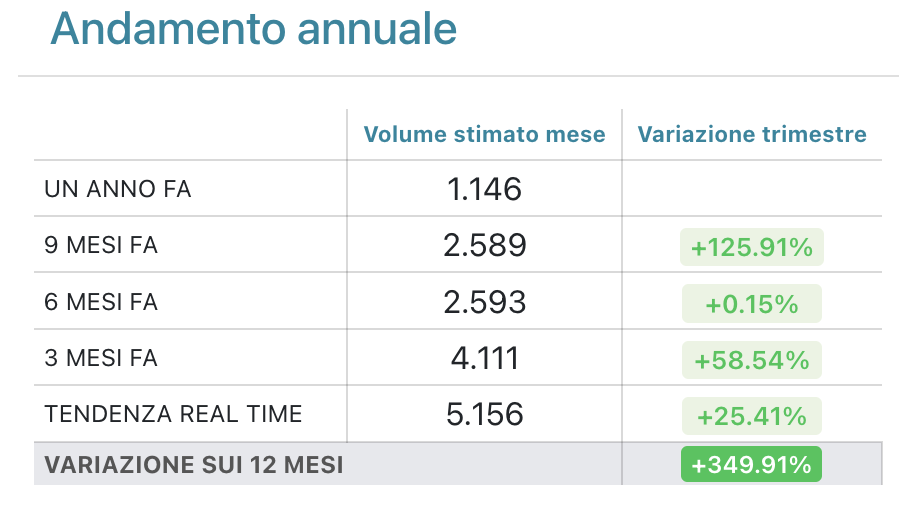
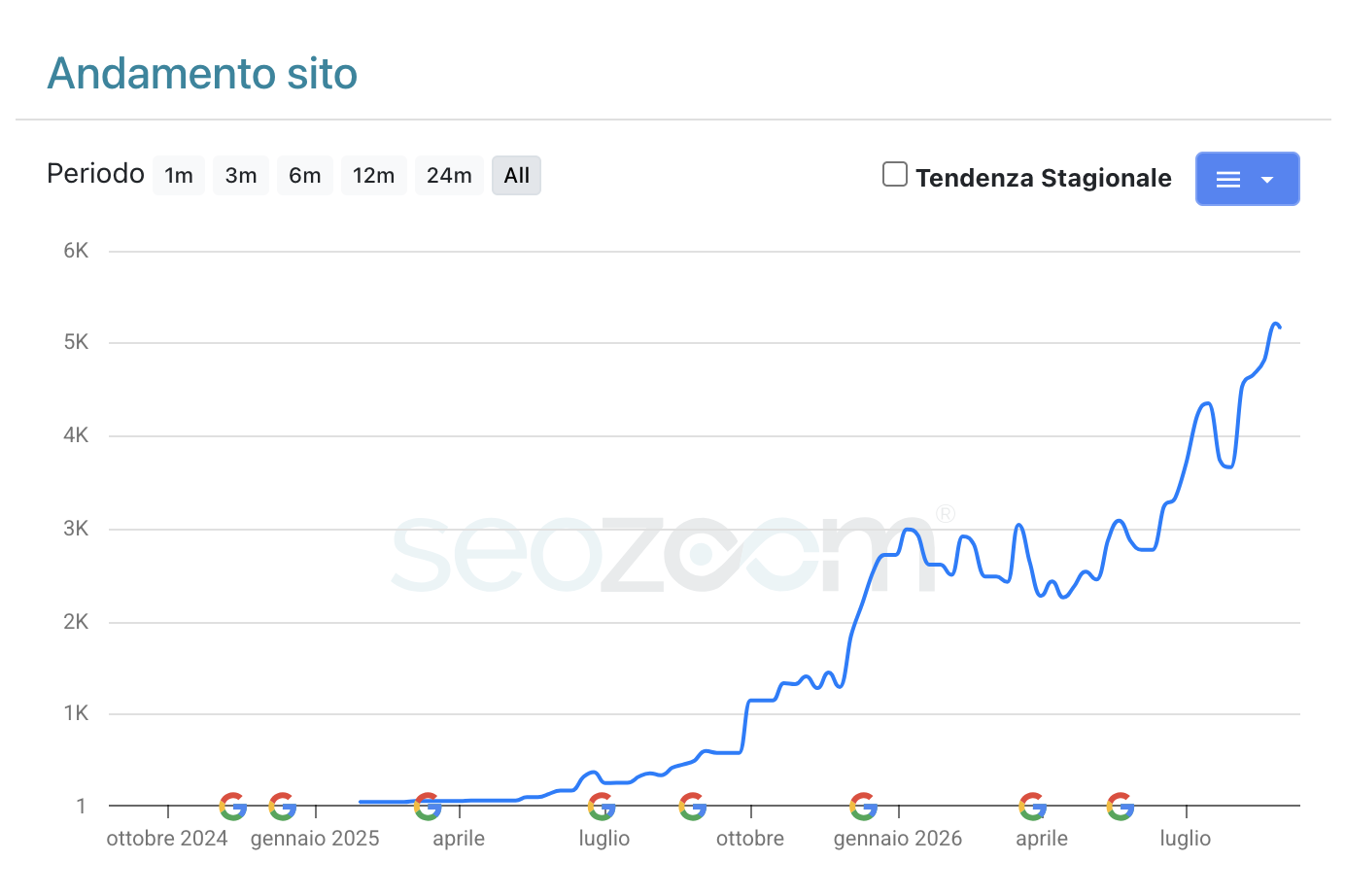
Over the twelve months covered by SEOZoom’s domain analysis (from September 2025 to September 2026), estimated monthly organic visits went from 1,146 to 5,156, a 349.91% increase. Michele walks us through the work, from keyword research to content organization, explaining how the suite supported the project’s decisions.
Starting over, in the patients’ own language
With Studio Rao, we literally started from below zero. A hacked site with almost no traffic. The goal was to build an online presence that would, first, highlight the practice’s expertise and, second, help people navigate a topic that’s generally very technical and hard to explain.
Someone might come to Google with a doubt or a problem, wanting to compare two treatments, or looking directly for a practice in their area. We wanted the site to offer a useful answer at each of these moments.
For me, the most interesting part of this project was connecting patients’ language to the information the practice could offer, working through a lot of jargon and uncommon terminology. The name of a therapy is just one starting point. Around it are questions, uncertainties, and comparisons that help you understand what content people actually need.
SEOZoom guided us through this analysis and gave us a foundation for organizing the editorial work.
We focused the work on 2 goals:
- Building organic presence for commercial searches related to the practice’s services, after first getting the site active. Traffic here is direct, commercial, and highly competitive.
- Building useful content around patient questions, with answers that are both patient-friendly and technically sound, to strengthen EEAT on studiorao.it: Experience, Expertise, Authoritativeness, and Trustworthiness. Traffic here is indirect, informational, and moderately competitive.
Guide or therapy page: the questions behind every page
The suite helped us at several stages, from the initial domain review to ongoing monitoring. The point was turning data into:
- which topics to cover?
- what type of page to build (therapy page or guide)?
- which content to expand on, and how to track its progress?
Keyword Infinity and the searches the practice can answer
Using keyword research and Keyword Infinity, we explored the variants tied to the practice’s services and topics. We evaluated opportunities based on intent, volume, and competitiveness.
The deciding question was always practical: does this search match a need Studio Rao can actually address? A few examples:
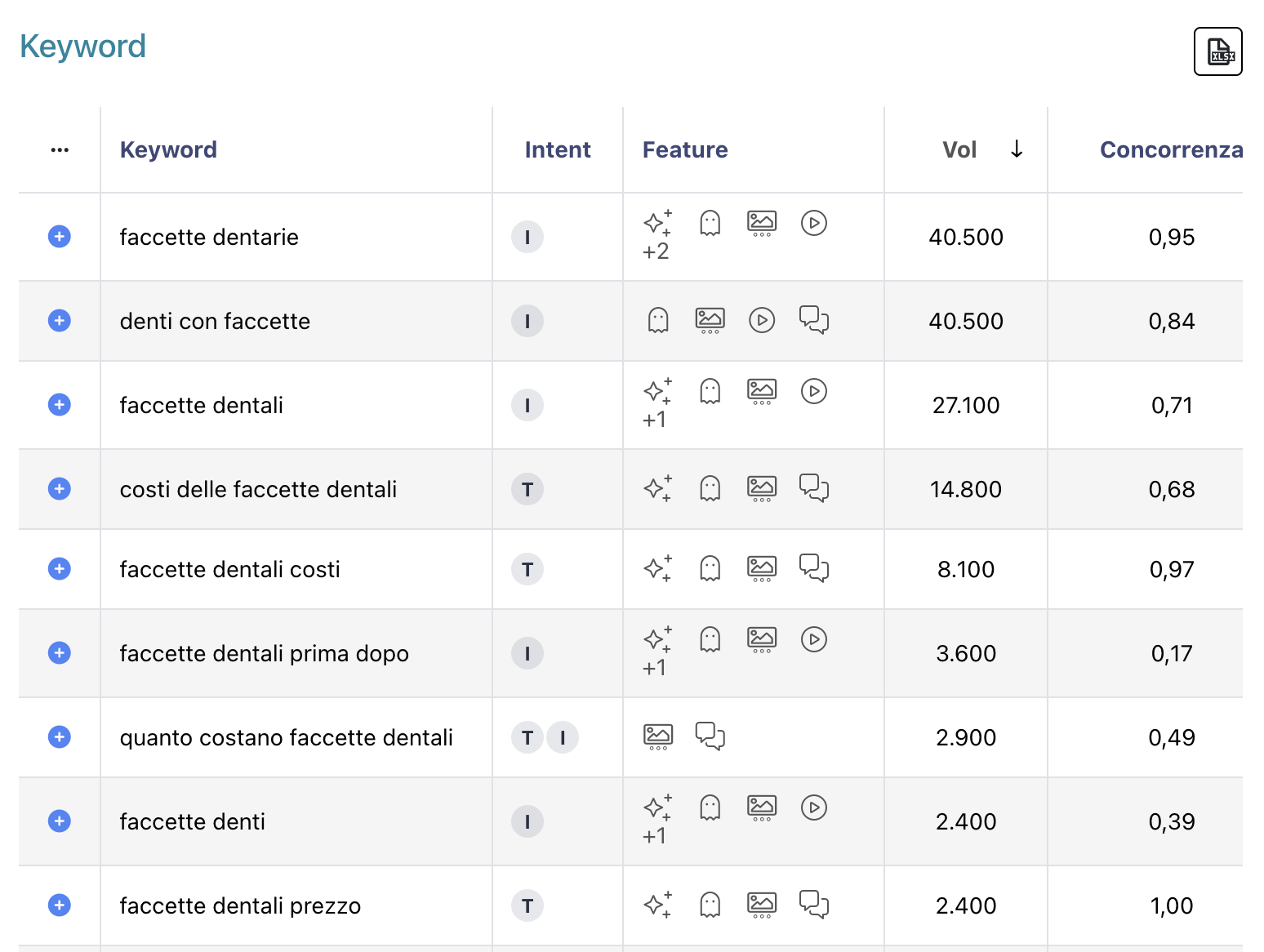
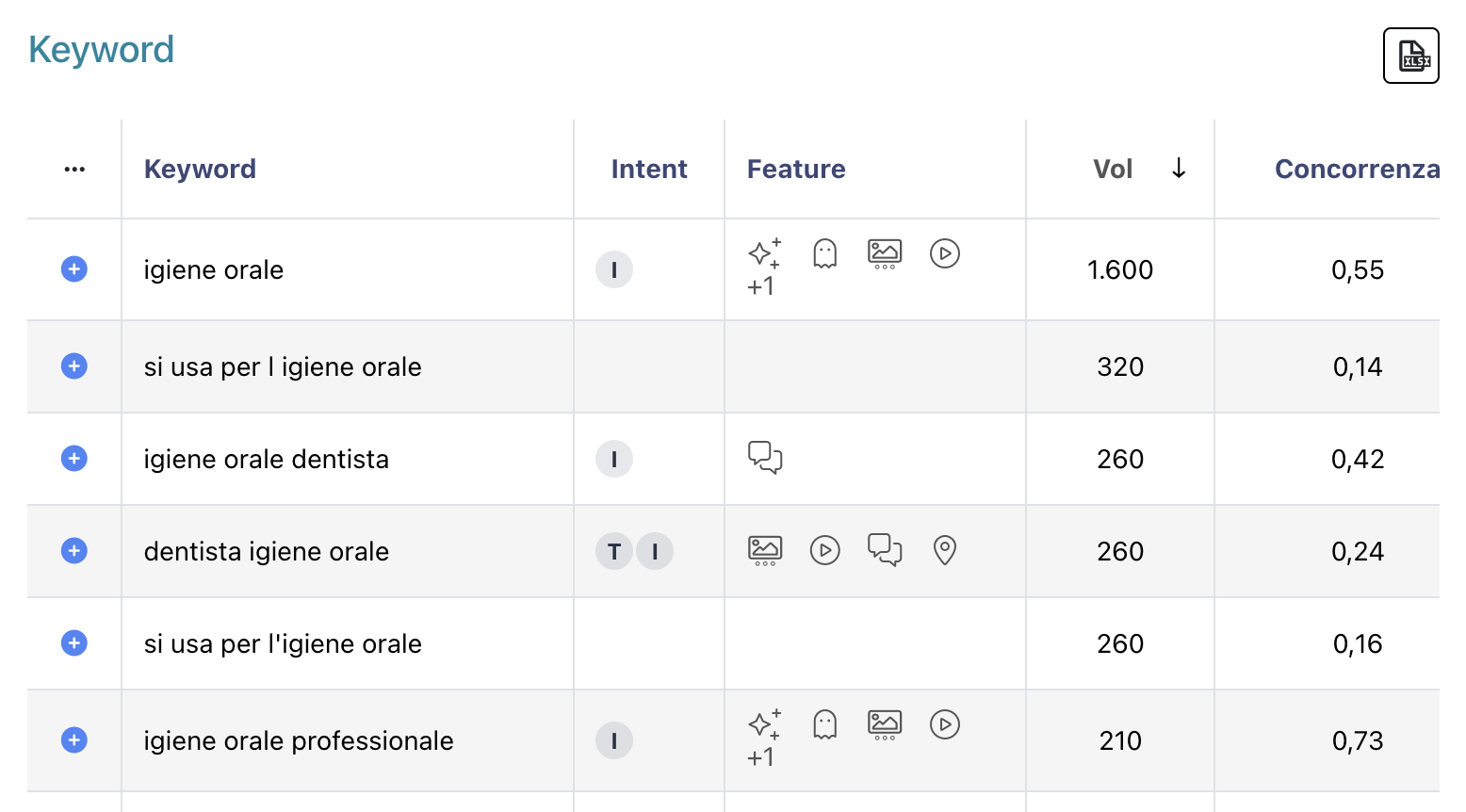
The tables already show the project’s goals. People searching for “veneers cost” or “veneers price” are evaluating the expense: these are transactional (T) searches, and the Competition column, close to 1, shows that Google Ads advertisers are bidding on them too. People searching for “veneers before after” want to know what results to expect, and the guide comparing veneers and whitening shows them before-and-after photos. The AI Overview icon, present on almost every veneers-related search, shows that Google often answers with AI-generated text: according to the SEOZoom study on the Health sector, at the start of 2026 this happened on more than 4 out of 10 searches.
Content Gap: competitor keywords the site was missing
The site comparison and Content Gap helped us identify topics to cover starting from day 1. Since this is a field full of technical terminology, it was invaluable for finding new keywords and searches not yet covered by our editorial plan.
Where the guide ends and the therapy page begins
The site structure developed around two complementary areas: Guides, for patient questions, and Therapies, to present the available treatments, and it was essential to avoid cannibalization between the two.
We then dug into search intent by looking at search results and using the SERP Comparator whenever we needed to assess how close two queries were. This step helped us decide which variants to cover together and which needs required separate pages.
This is what happens on the site with veneers: they have a page under Therapies and also show up in the guide comparing them with whitening, without competing against each other. On Google, in fact, “dental veneers” mostly leads to pages explaining what they are and how much they cost, while “veneers and whitening” leads to pages comparing the treatments. In SEOZoom data from October 7, 2026, the top 10 results for the two searches share no pages at all.
Assistente Editoriale, ChatGPT, and Perplexity on the guides
With the Editorial Assistant we worked on which topics to develop, which questions to clarify, and how to keep everything consistent with the search intent mentioned above.
We relied heavily on both the SEOZoom Editorial Assistant and ChatGPT and Perplexity during this phase to work through every doubt or uncertainty about the content: FAQs, search intent, internal link building, and image alt text.
From tartar to oral hygiene: the guides that lead to services
One example of this approach is the guide on tartar formation. The content starts from a specific question, develops the related aspects, and links both to the in-depth piece on the difference between plaque and tartar and to the page dedicated to oral hygiene and prevention.
This lets the reader move from understanding the problem to information about the relevant service, which for the practice means pure monetization.
The guide comparing veneers and whitening instead addresses a need for evaluation. It lays out the differences, links information about the treatments, shows before-and-after images, and offers a way to contact the practice.
Estimated organic visits more than quadrupled in twelve months
SEOZoom’s domain analysis shows a 349.91% increase in estimated monthly organic traffic, up from 1,146 to 5,156. The final value is roughly 4.5 times the starting one, and looking at the full picture (across 24 months of SEO work), we went from 0 to 5,156.
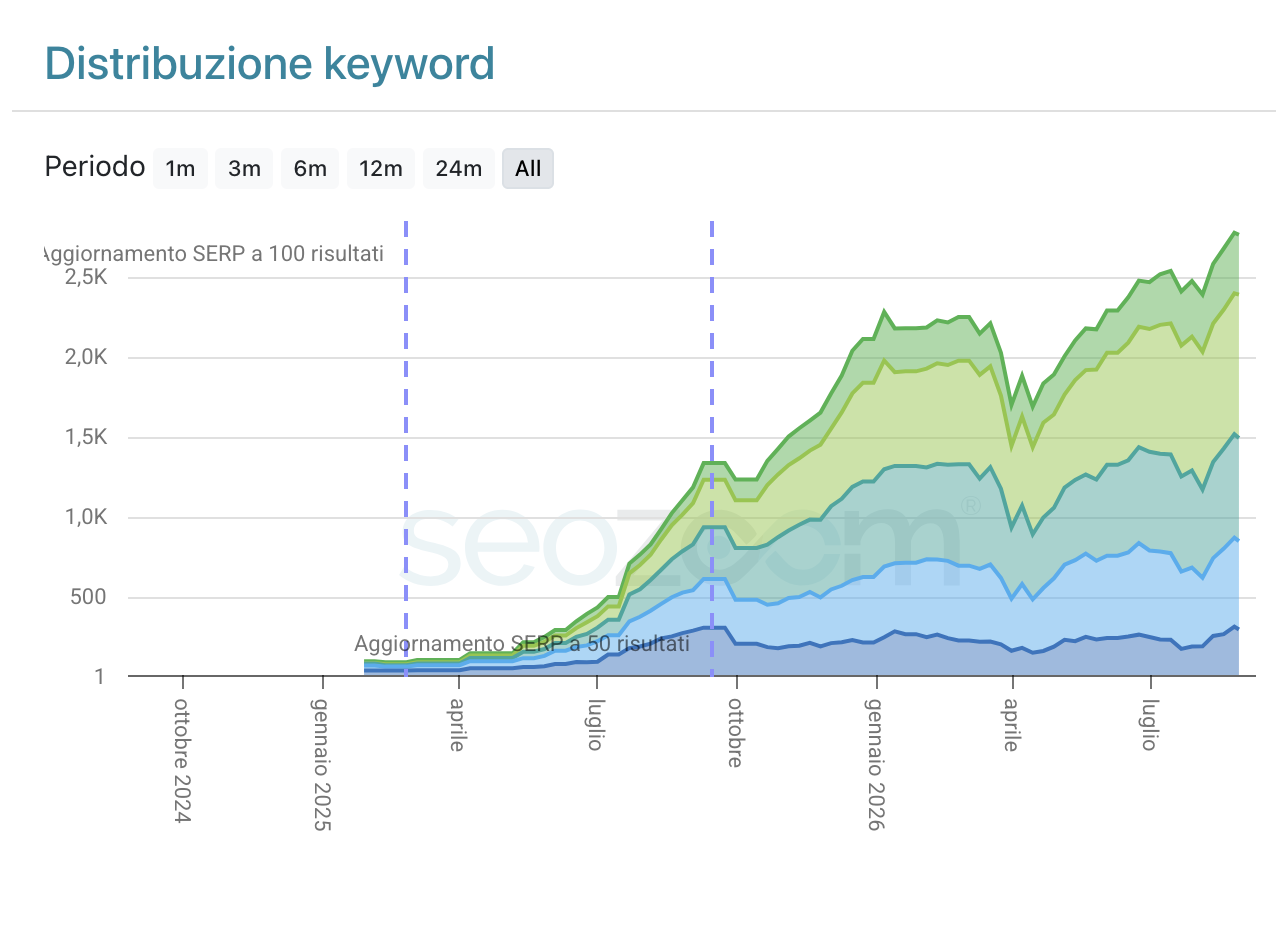
The keyword chart now tops 2,500 keywords the site ranks for in the SEOZoom database.
The 1,146 and 5,156 figures Michele mentioned are estimated monthly organic visits. They come from the Annual Trend table in Website Analysis, the SEOZoom section that examines a domain, and reflect values from late August 2026: they update with every scan, so today’s numbers are different. The estimate starts from the keywords the site ranks for and their search volume, and it’s calculated the same way for every site, so growth can be compared against competitors’. A first-page ranking doesn’t guarantee a click: the real clicks, like real visits, show up in Search Console and Analytics.
Every page with a role in the patient journey
The Studio Rao project reinforced a principle I consider essential: every page must have a clear job in the reader’s journey.
Patients’ questions gave us our starting point; the practice’s expertise and services defined the context. The value of SEOZoom was keeping research, comparison, and monitoring connected, so we could revisit decisions with new data and tie together every stage of the funnel, from discovering the practice (through the guides) to monetization (through the related services).
The decisions SEOZoom made measurable
In healthcare, Google rewards a handful of big names. According to our industry analysis, in early 2026 rankings in this space were the most stable on the Italian web, with domains like Humanitas, Santagostino, and Wikipedia at the top. Studio Rao was coming from a hacked site, and in one year it more than quadrupled its estimated organic traffic. The method works for any market where professionals and customers use different words for the same thing: tax, law, construction.
Each time, Qreativa had to decide which of the many names for a treatment to use, which questions deserved a guide, and when a guide risked pulling visibility away from the service page. These are calls you need to make before you write, and a domain that just restarted doesn’t have its own data yet: Search Console and Analytics only record the visits that already arrive.
SEOZoom works with search and competitor data. Keyword Infinity assigns a volume to every variant patients use to search for the same treatment. Content Gap lists the queries competitors rank for and you don’t, meaning the demand no page of yours currently captures. SERP Comparator measures how many results two similar searches share, and that number tells you whether you need one page or two.
Without the platform, you’re left with manual work: search suggestions, SERPs opened one at a time, competitor sites read in full, spreadsheets. It costs hours and leaves gaps: Google Ads Keyword Planner tends to merge similar variants, no public tool shows which queries a site other than yours ranks for, and a manual comparison has to be redone every time the results change.
If you’re starting from scratch, start with competitor rankings: they’re the first data you have access to. If you already have guides and service pages, check which ones compete for the same query, and link every guide to the therapy that solves the problem, the way the tartar article links to oral hygiene. Real clicks show up in Search Console; Analisi Sito Web tells you whether you’re gaining ground on competitors.


 Verified reviews on Trustpilot