



Reporting tools
Your work is invisible until you talk about it. Use SEOZoom data to build a clear narrative that justifies investments and demonstrates growth.
Create professional documents that speak your clients’ language and automate your reporting workflow to ensure timely updates without spending hours in Excel.
La piattaforma che unisce SEO, GEO, AI per rendere i tuoi contenuti visibili su Google e Motori AI


Your technical expertise deserves a presentation that lives up to it.
When you deliver a report, you are doing one specific thing: you are putting down in black and white what has changed, why it has changed, and what priorities make sense to address now.
With SEOZoom, you can transform dashboards and analyses into professional PDFs that are readable even by those who don’t live and breathe SERPs, and solid enough to hold up in a call with a demanding client or an internal discussion with your team.
Sign your communication
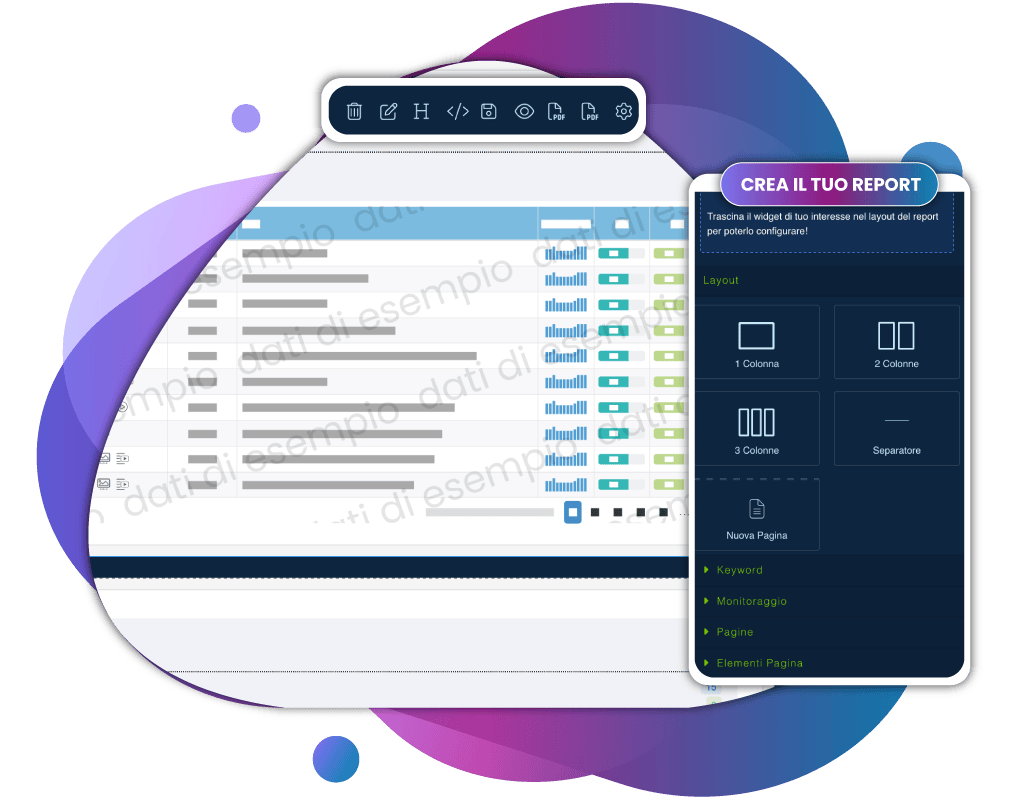
Every client has a different obsession—growth, declines, content, competitors, backlinks—and your report must respond precisely to that. Say goodbye to “standard” PDFs: here you can build a tailored document, choosing which metrics to show and how to organize them, to tell only the story that matters for that specific project. Add your logo, define the structure, and create an asset that reinforces your brand’s authority, automating delivery to keep the relationship active.
- Customizable modules: select sections and widgets and order them according to the story you want to tell
- Complete customization: create custom layouts to standardize agency output
- Automation: schedule automatic mailings to clients or your team without wasting hours on exports and layout
Farewell to “where do we start?”
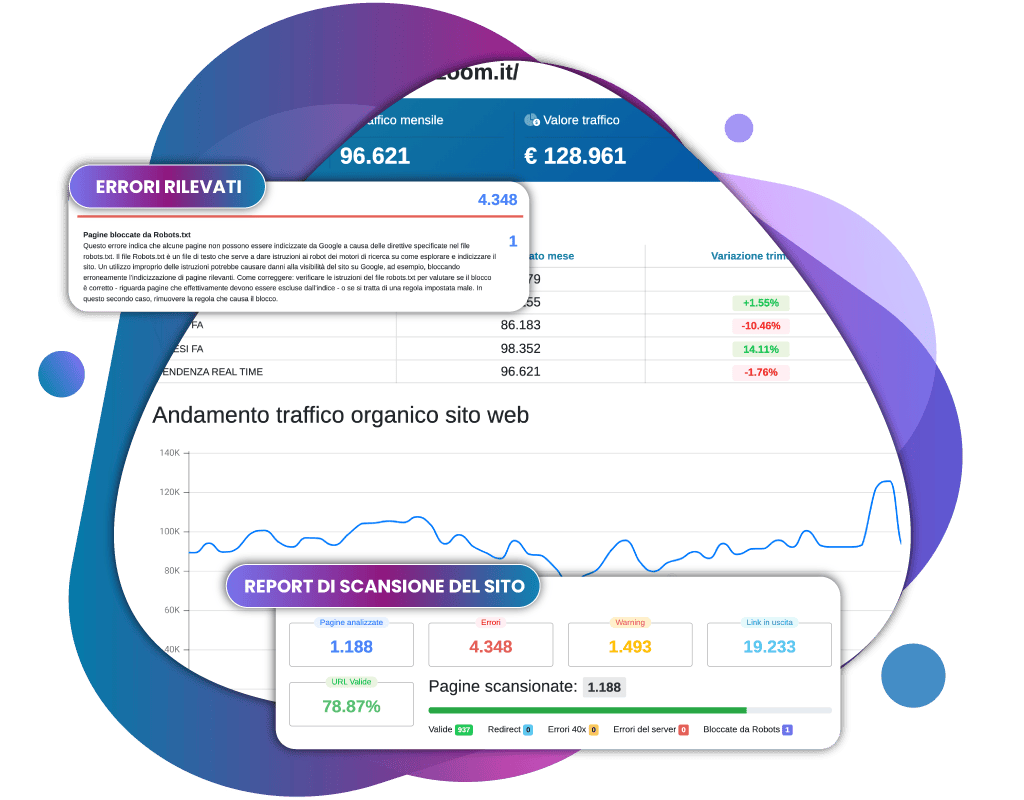
When you need to explain a decline, set up a plan, or close a quote, you need a document that brings order and makes it clear “what is blocking what.” SEO Audit collects the technical and on-page critical issues of the site and translates them into operational priorities: a clean basis to share with customers, teams, and development, leaving no room for interpretation.
- Technical coverage: overview of critical issues detected on pages, tags, and site structure
- Operational reports: errors and warnings with practical indications of the action to be taken
- Priority actions: list of points to act on first, to avoid dispersion and random interventions
Everything you need to know, at a glance
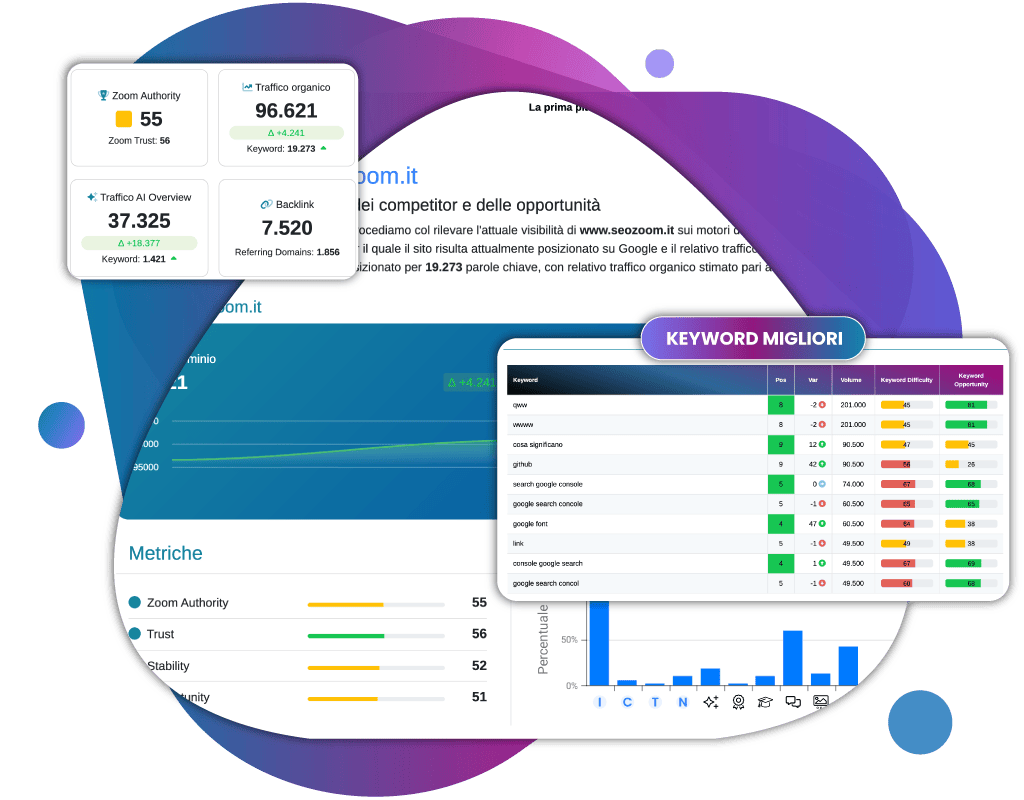
There are times when you don’t need depth, but you need readiness. Quick Audit is the answer for quick briefings, estimates, or impromptu calls: get an instant view of vital metrics—traffic, authority, trends—to quickly understand if the site has potential or obvious problems. Avoid arriving unprepared for a meeting and assess the situation before you even begin the actual analysis.
- Immediate insight: essential data at a glance
- Quick check: identify strengths and weaknesses in seconds
- Sales support: use macro numbers to back up your initial assessments
The numbers that prove it
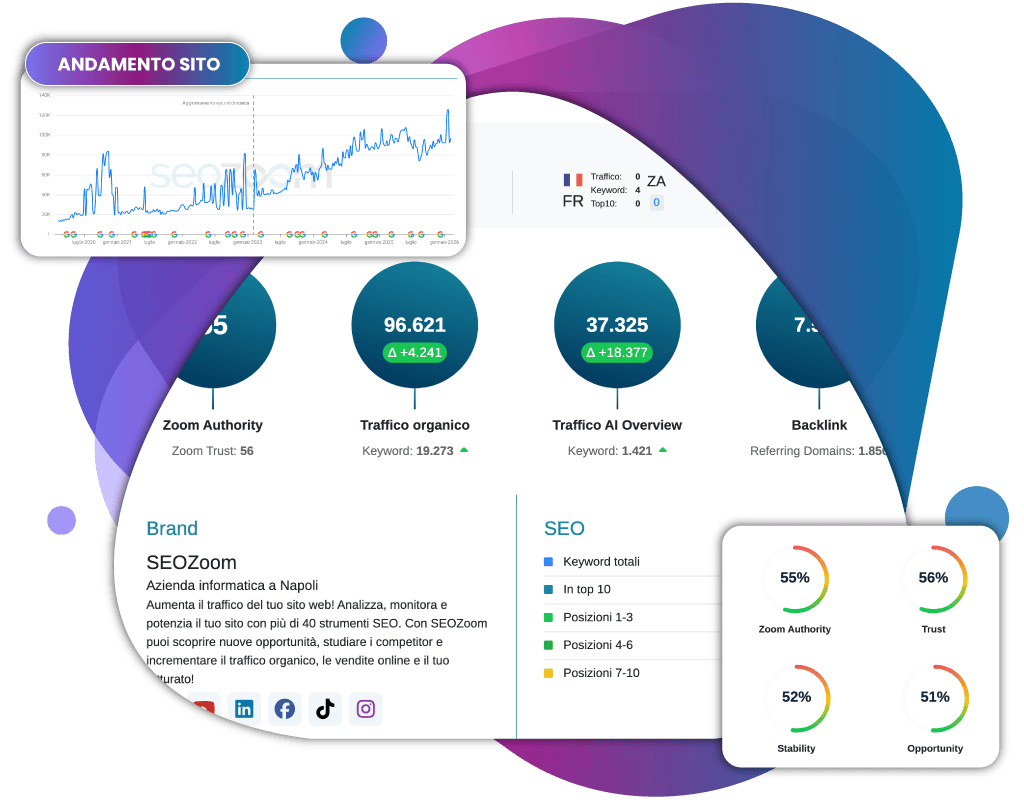
Cross-reference traffic data, keyword rankings, backlinks, and AI Overview presence to demonstrate how a website is truly performing, without getting lost in the details. It is the “desktop” report for periodic analysis, in-depth checks, and reasoned comparisons. Three quick use cases: onboarding a new client, periodic updates on ongoing activities (monthly or quarterly), and moments of comparison before deciding on priorities and investments.
- Integrated analysis: see how traffic, keywords, and links interact on any domain
- Focus on AI Overview: check performance in Google’s AI boz
- Objective assessment: get a clear picture of competitors and prospects
The SERP feasibility study
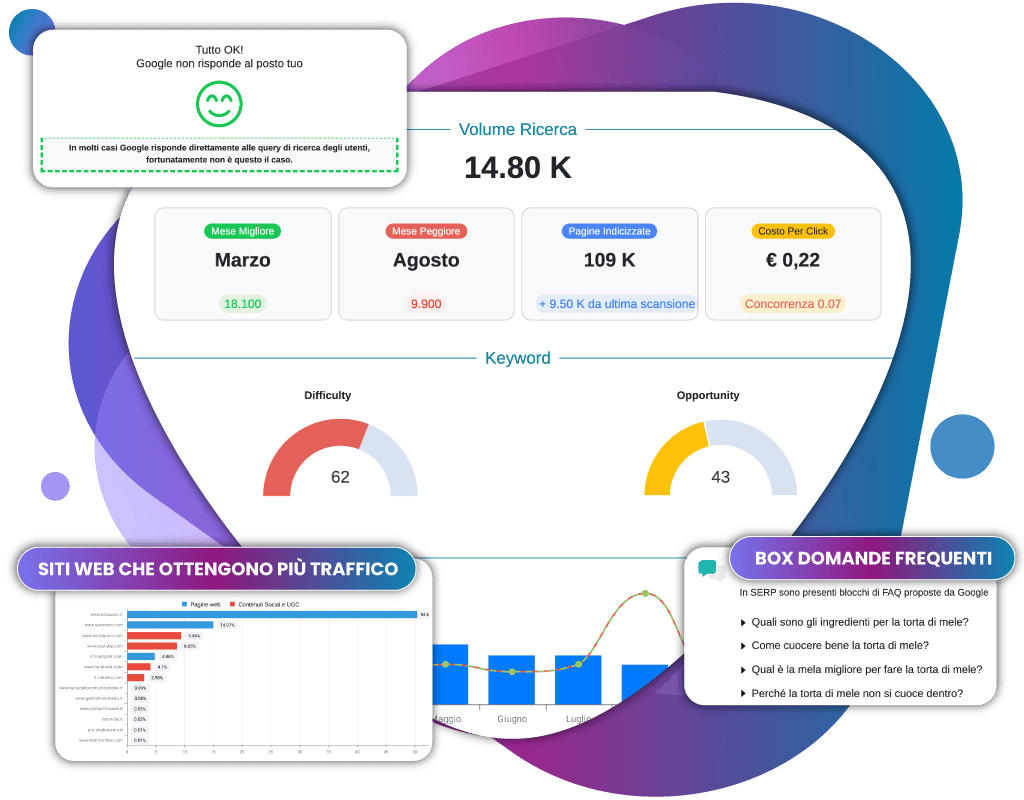
Positioning costs resources, so it’s better to invest only where there is a return. This report breaks down the SERP to show you, with data in hand, whether that keyword is a sensible target: trends, level of competition, type of results that Google is rewarding, and real space to enter. It’s perfect when you need to justify an editorial or commercial choice and define the right angle before writing or optimizing.
- Intent analysis: understand what the user is really looking for
- Focus on the topic: identify the related concepts that are essential for semantic relevance
- Competitor analysis: see how others are interpreting the query and do better
Vertical detail on each page
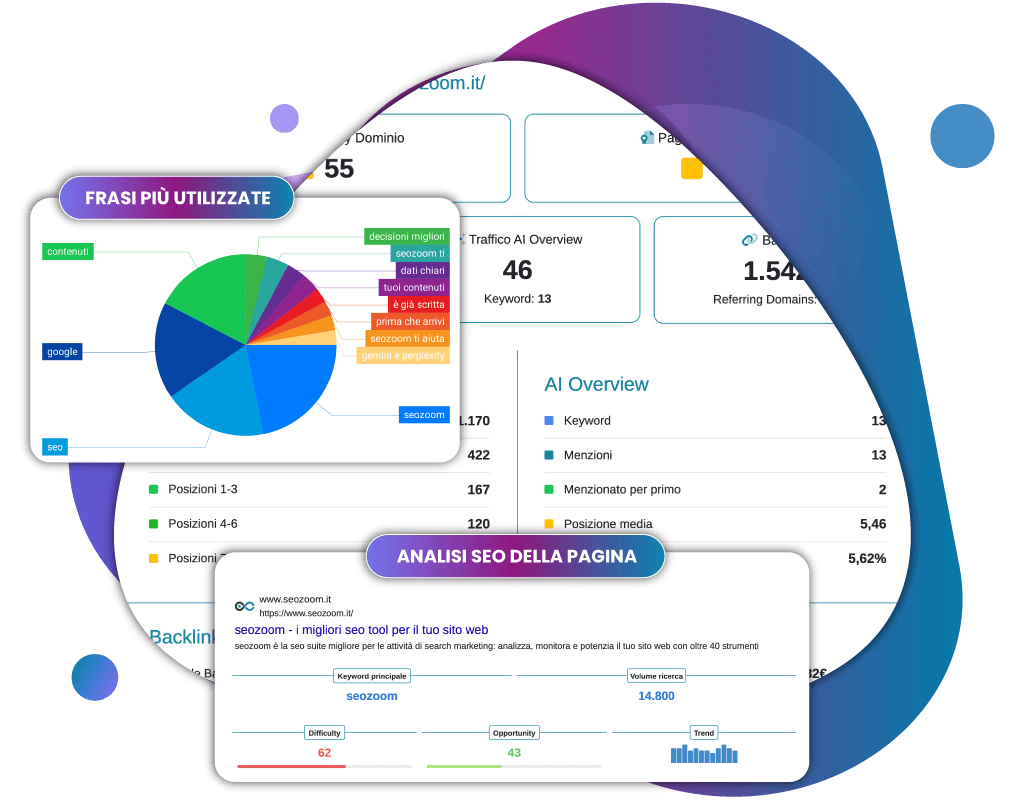
When a client asks for landing page results or you need to understand why a competitor’s article ranks first, you need surgical data. Focus on the individual resource: how it is optimized, what it actually ranks for, and how much traffic it brings from Google and AI Overview. It’s precision analysis to validate the delivery of specific content, justify the need for a rewrite, or reverse engineer someone else’s winning page to replicate its success.
- Precise data: get clean metrics for a single address, without interference.
- SERP and AI Overview: presence in results and citations in generative boxes, with dedicated indicators.
- Proof of value: demonstrate with numbers whether the resource works or needs to be changed
7 days for FREE
