Make your site readable
for Google and AI
AI has changed search, but if Google cannot crawl your site, artificial intelligence will never be able to use it as an answer.
Use these tools to clear the technical obstacles, design a logical information architecture and hit search intent with every piece of content.
Technical crawl
1.284 URLsIssues found
- Broken links · 404 23
- Redirect chains 148
- Error-free pages 1.113
Core Web Vitals
- LCP0,1 s
- INP0 ms
- CLS0,0
- TTFB0 ms
Crawl depth
The platform that brings SEO, GEO and AEO together to make your content visible on Google and AI engines
 Google
 Gemini
 ChatGPT
 Perplexity
 Claude
Work on the technical side
and on the structure.
Diagnosis, insight, comparisons over time: you decide which approach to take and which data to question in order to sharpen your strategy and let your content be read, indexed and ranked by every search engine.
The technical X-ray
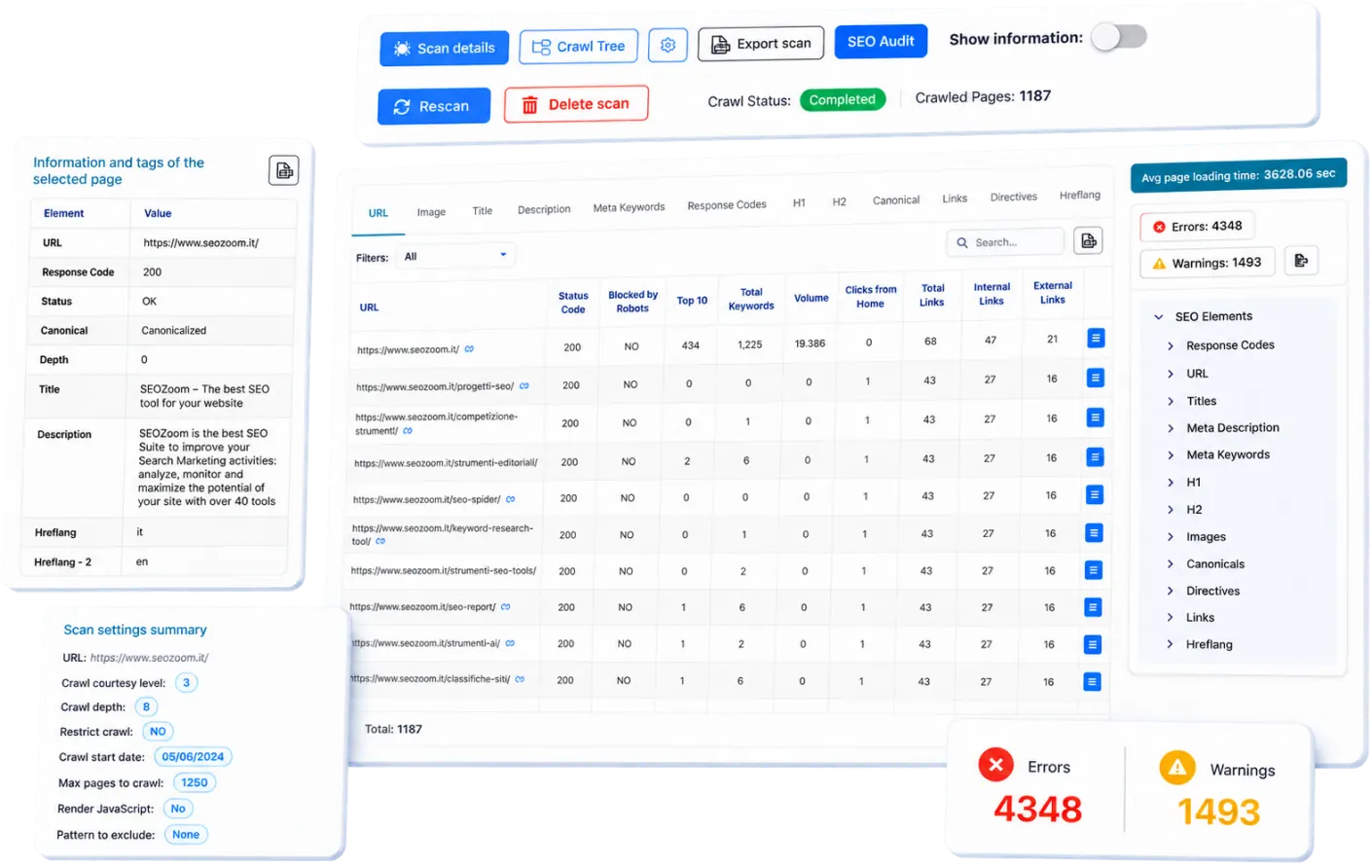
Your site as the crawlers see it: find broken links, status code problems and wrong configurations that waste crawl budget and hold performance back. Bring to light what a manual check misses and get the data to make the code right.
- A complete check of status codes, metadata and directives on every page
- Nothing to install: it works straight from the browser
- Smart filters for fast, focused, useful analysis
Data-driven design
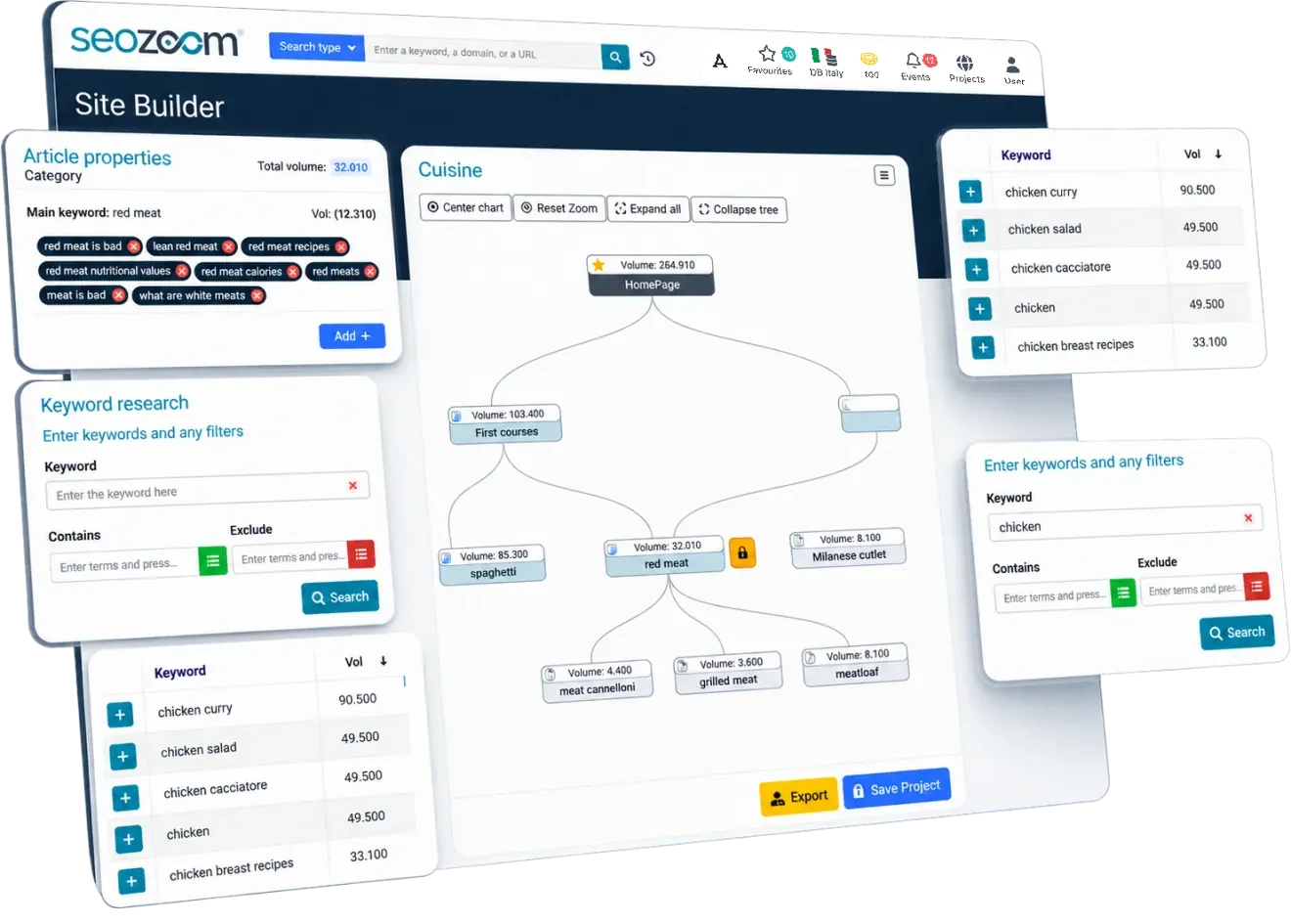
Architecture is not something you improvise. Build the site tree starting from real data: turn keywords and opportunities into a logical structure of categories, topic hubs and related pages. Set a clear hierarchy that leads engines and users exactly where you want them.
- Draw the skeleton of the site on search volumes and intent
- Create topic clusters that show vertical expertise and relevance
- Plan URLs and internal links before writing a single line
Analysis over time
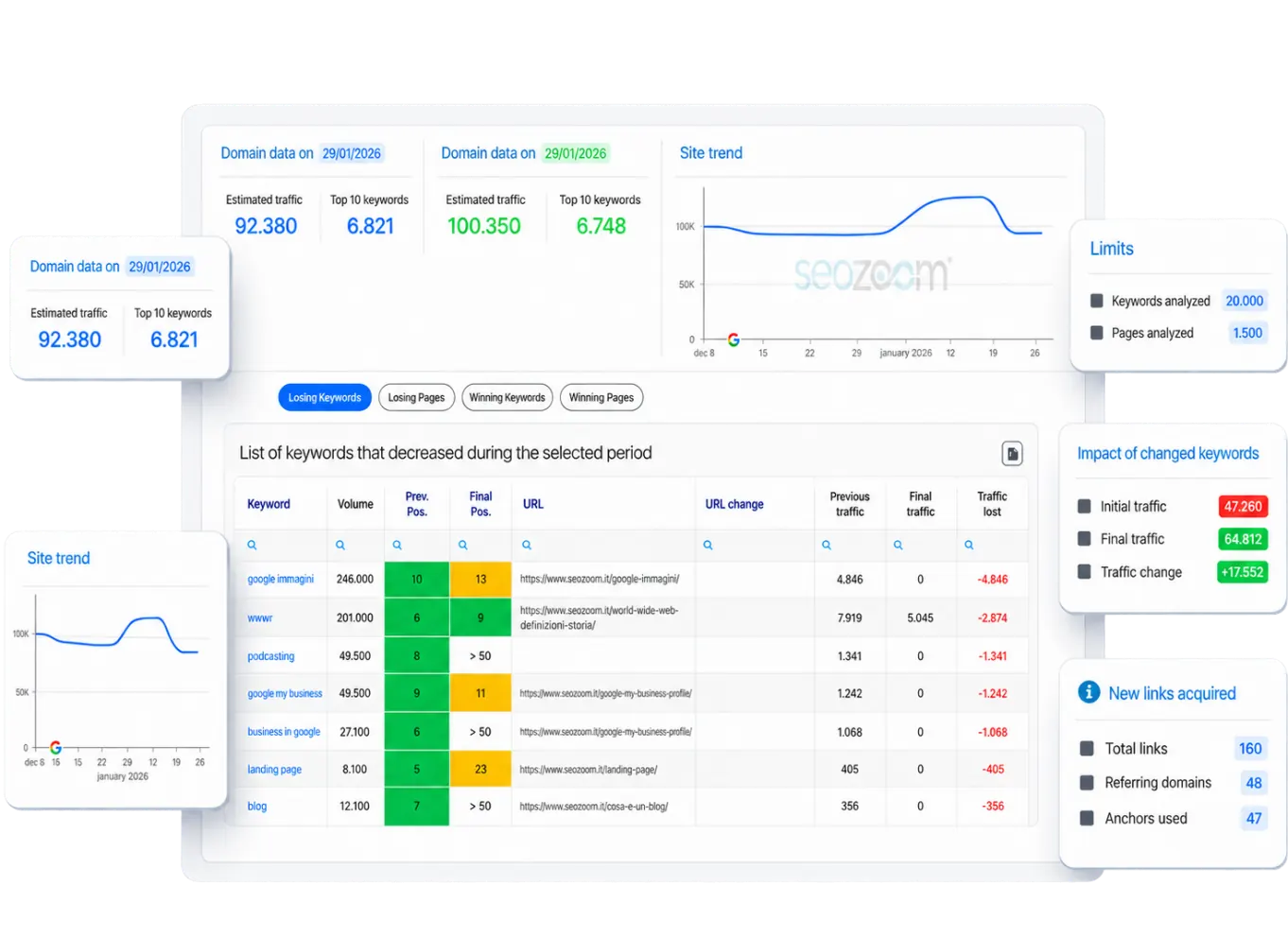
Lost positions and traffic? Look at the context to see whether the fault is yours, an update's or a new competitor's. Travel back through your site's past, compare the key moments and find out what worked (and what did not).
- A direct comparison between periods, to measure how traffic has moved
- Google updates flagged automatically on the visibility charts
- Detail on the single pages that gained or lost positions
Comparing intents
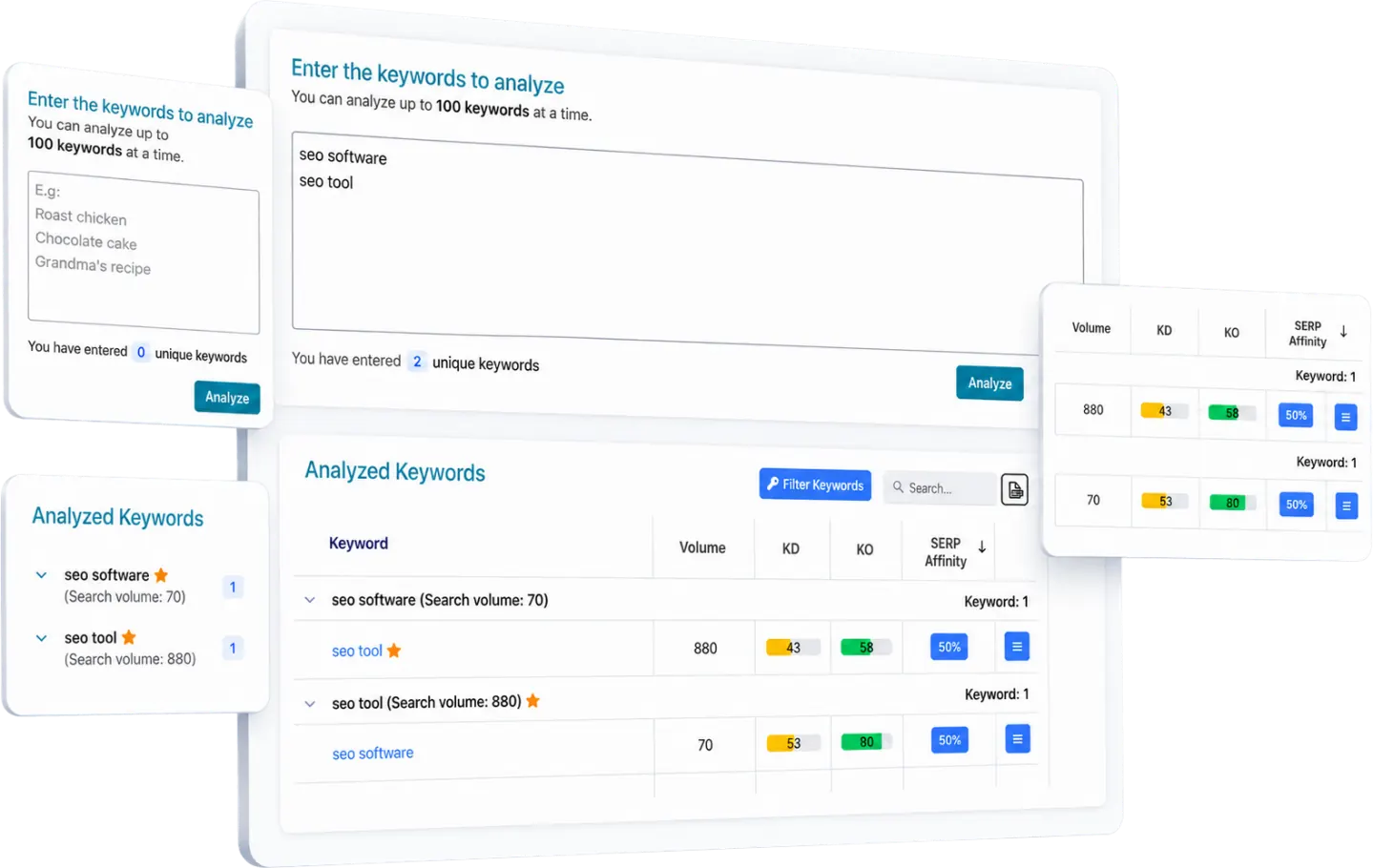
Compare SERPs to see how the engine answers your queries: if the results match, the intent is one and you should put your weight behind a single strong piece. If they diverge, you need separate pages.
- Measure how far the results overlap across several searches
- Understand whether Google treats your queries as one or keeps them apart
- Optimise your content and avoid overlap and waste
The market will not wait.
Take control now.
The only platform to hold your ground on Google and AI engines.
- Full
platform (trial included) - Strategy demo
with an expert - Support
in Italian